Pediatric Inguinal Hernia is a condition in which a portion of the intestine or abdominal tissue protrudes through a weak area in the lower abdominal wall near the groin. This creates a visible swelling or bulge in the groin region.
An inguinal hernia in children usually develops due to incomplete closure of a passage called the inguinal canal before birth. During fetal development, this canal normally closes on its own, but if it remains open, abdominal contents may pass through it and form a hernia.
Pediatric inguinal hernia is commonly seen in infants and young children and occurs more frequently in boys than girls. The swelling may become more noticeable when the child cries, coughs, strains, or stands.
Early diagnosis and timely treatment are important because untreated hernias may lead to complications such as incarceration or strangulation of the intestine.
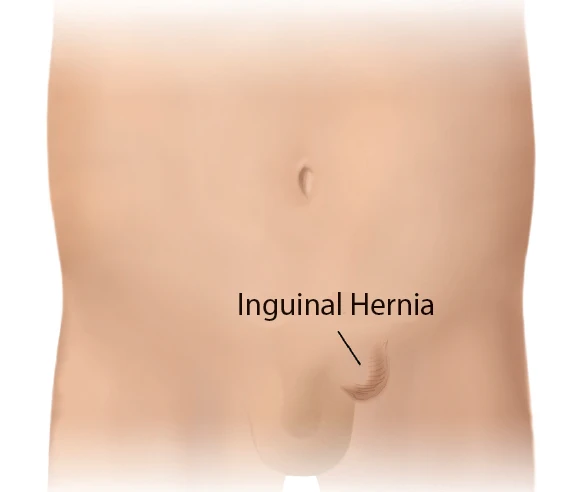
The symptoms of pediatric inguinal hernia may vary depending on the size and severity of the hernia.
Common symptoms include:
Some hernias may remain painless in the early stages.
Pediatric inguinal hernia mainly occurs due to incomplete closure of the inguinal canal before birth.
Common causes include:
Most inguinal hernias in children are congenital, meaning the child is born with the condition.
1. Indirect Inguinal Hernia: This is the most common type of pediatric inguinal hernia. It occurs when abdominal contents pass through the inguinal canal due to incomplete closure before birth.
2. Direct Inguinal Hernia: This type occurs due to weakness in the abdominal wall muscles. It is less common in children.
3. Reducible Inguinal Hernia: The swelling can move back into the abdomen either naturally or with gentle pressure.
4. Incarcerated Inguinal Hernia: The hernia becomes trapped and cannot move back into the abdomen.
5. Strangulated Inguinal Hernia: This is a serious condition in which the blood supply to the trapped intestine becomes blocked. It requires emergency surgery.
Certain factors increase the risk of developing pediatric inguinal hernia.
Risk factors include:
If untreated, a pediatric inguinal hernia may lead to serious complications.
Doctors usually diagnose an inguinal hernia in children through physical examination.
Diagnosis may include:
Most pediatric hernias can be diagnosed clinically without complicated tests.
Pediatric inguinal hernia usually requires surgical treatment because it does not close naturally once present.
Very small doubtful swellings may sometimes be monitored temporarily.
Surgery is the definitive treatment for pediatric inguinal hernia.
During surgery:
The procedure is usually safe and highly successful.
Some children may undergo minimally invasive laparoscopic surgery for smaller scars and faster recovery.
Most children recover quickly after surgery.
Parents are usually advised to:
Most children return to normal activities within a few days to weeks.
Helpful care measures include:
Early treatment helps prevent complications.
Parents should seek medical attention if the child develops:
Early diagnosis of pediatric inguinal hernia helps avoid emergency complications.
Yes, an inguinal hernia is one of the common surgical conditions seen in infants and children.
No, a pediatric inguinal hernia usually requires surgery and does not close on its own.
Yes, pediatric hernia surgery is commonly performed and generally very safe.
A trapped hernia may cut off the blood supply to the intestine and become an emergency.
Recurrence is uncommon but may occur in rare cases.
Yes, many children can undergo minimally invasive laparoscopic hernia repair.
Dr. Muni Varma is an experienced Pediatric Surgeon and Pediatric Urologist offering advanced diagnosis and treatment for pediatric inguinal hernia and other congenital surgical conditions. With expertise in infant and child hernia repair, minimally invasive surgery, and neonatal surgical care, Dr. Varma provides safe, child-focused treatment using modern surgical techniques. From early diagnosis to advanced laparoscopic hernia repair, he focuses on preventing complications, ensuring faster recovery, and providing the best possible outcomes for children. Early expert treatment helps children recover comfortably and lead healthy lives.