Omphalocoele in children is a congenital abdominal wall defect in which the baby’s intestines, liver, or other abdominal organs develop outside the abdomen through the belly button area. These organs remain covered by a thin transparent sac.
During normal fetal development, the intestines temporarily move outside the abdomen and later return inside. In babies with omphalocoele, the abdominal wall does not close properly, causing abdominal organs to remain outside the body.
Omphalocoele is usually diagnosed during a pregnancy ultrasound or immediately after birth because of the visible abdominal swelling. The condition may range from mild to severe, depending on the size of the defect and the organs involved.
Early diagnosis and proper surgical treatment are important to protect the exposed organs, prevent infection, and support healthy growth and development.
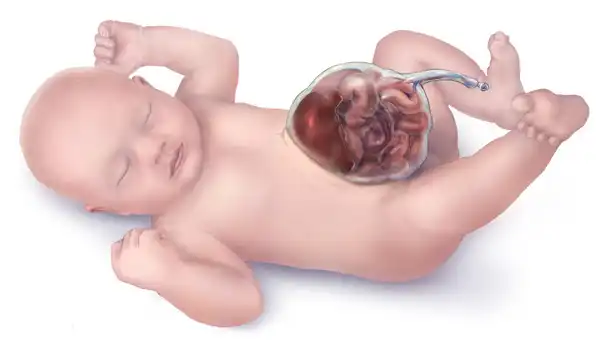
The symptoms of omphalocoele are usually visible at birth.
Common symptoms of omphalocoele in children include:
The severity of symptoms depends on the size of the omphalocoele and associated conditions.
Omphalocoele develops during fetal growth before birth.
The exact cause is not always known, but possible causes and contributing factors include:
Some children with omphalocoele may also have associated heart, spine, or gastrointestinal abnormalities.
Only a small portion of the intestine protrudes outside the abdomen.
Large abdominal organs such as the liver and intestines protrude outside the abdomen.
The condition occurs without other major congenital abnormalities.
Omphalocoele occurs along with genetic syndromes or multiple congenital abnormalities.
Certain factors may increase the risk of omphalocoele.
Risk factors include:
Many cases occur without a definite known cause.
If untreated, an omphalocoele can lead to serious complications.
The exposed abdominal organs are vulnerable to infection.
The protective covering may tear and expose organs directly.
Large omphalocoeles may affect lung development and breathing.
Some babies may struggle with feeding and digestion.
Blocked or damaged intestines may occur in severe cases.
Associated congenital abnormalities may affect overall growth.
Doctors usually diagnose an omphalocele during pregnancy or immediately after birth.
Diagnosis may include:
These tests help evaluate associated abnormalities and plan treatment.
Treatment depends on the size of the omphalocoele and the baby’s overall condition.
After birth, the exposed organs are protected carefully to prevent infection and fluid loss.
The baby may require:
Surgery is usually required to place the organs back inside the abdomen and close the abdominal wall.
In smaller defects, the organs can be returned, and the abdomen closed in a single surgery.
Large omphalocoeles may require gradual repair over several days or weeks.
Babies may require intensive neonatal monitoring after surgery.
Recovery depends on the size of the defect and associated abnormalities.
Parents are usually advised to:
Some babies may require longer hospital stays, especially in giant omphalocoele cases.
Helpful care measures include:
Long-term follow-up helps support healthy development.
Parents should seek immediate medical attention if the child develops:
Early medical care helps prevent complications.
Yes, omphalocoele is a congenital condition that develops before birth.
Yes, many cases are diagnosed during prenatal ultrasound.
Yes, most babies require surgery to repair the abdominal wall defect.
In omphalocoele, the organs are covered by a sac, while in gastroschisis they are exposed without a protective covering.
Many children recover well with timely surgery and proper neonatal care.
Yes, some babies may have associated heart, genetic, or gastrointestinal abnormalities.
Dr. Muni Varma is an experienced Pediatric Surgeon specializing in the diagnosis and treatment of omphalocoele and other complex neonatal surgical conditions. With expertise in neonatal abdominal wall defect repair, pediatric gastrointestinal surgery, and advanced newborn surgical care, Dr. Varma provides compassionate child-focused treatment using modern surgical techniques. From prenatal counseling and neonatal stabilization to advanced reconstructive surgery and long-term follow-up, he focuses on protecting organ function, preventing complications, and supporting healthy growth and recovery. Early expert surgical care and dedicated monitoring help achieve better long-term outcomes for children with omphalocoele.