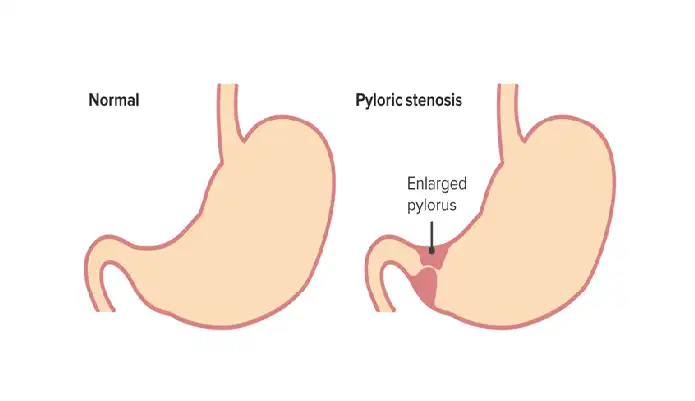
Infantile Hypertrophic Pyloric Stenosis (IHPS) is a condition in which the muscle at the lower end of the stomach, called the pylorus, becomes abnormally thickened. This thickened muscle blocks the passage of food from the stomach into the small intestine.
As a result, milk and food cannot move normally through the digestive system, causing repeated vomiting and feeding difficulties. IHPS usually affects infants between 2 and 8 weeks of age and is one of the most common causes of vomiting requiring surgery in young babies.
The condition is more common in boys than girls and can lead to dehydration, weight loss, and nutritional deficiencies if left untreated. Early diagnosis and surgical treatment usually result in excellent recovery.
Symptoms of IHPS usually develop gradually during the first few weeks of life.
Common symptoms of Infantile Hypertrophic Pyloric Stenosis include:
Projectile vomiting is one of the most characteristic signs of IHPS.
The exact cause of IHPS is not completely understood.
Possible causes and contributing factors include:
Most cases occur without any identifiable cause.
Although IHPS is generally considered a single condition, it may be categorized based on severity and presentation.
Symptoms are mild and may initially resemble normal infant reflux or feeding intolerance.
The pyloric muscle becomes significantly thickened, causing severe vomiting, dehydration, and weight loss.
A severe form where food is unable to pass from the stomach into the intestine.
Certain factors may increase the risk of IHPS.
Risk factors include:
Boys are affected more frequently than girls.
If untreated, IHPS can lead to serious complications.
Repeated vomiting causes significant fluid loss.
Loss of stomach contents may disturb important body salts.
Poor feeding affects growth and development.
Infants may fail to gain weight appropriately.
Long-standing feeding problems can affect normal development.
Severe dehydration may become life-threatening if not treated promptly.
Doctors use clinical examination and imaging tests to diagnose IHPS.
Diagnosis may include:
Abdominal ultrasound is the most commonly used test to confirm Infantile Hypertrophic Pyloric Stenosis.
IHPS requires surgical treatment after correcting dehydration and electrolyte imbalances.
Before surgery, the baby may require:
Pyloromyotomy is the standard treatment for IHPS.
During this procedure:
This surgery has a very high success rate.
Some babies may undergo minimally invasive laparoscopic surgery with smaller incisions and faster recovery.
Most babies recover quickly after surgery.
Parents are usually advised to:
Most infants begin feeding normally within a short period after surgery.
Helpful care measures include:
Most babies experience normal growth and development after treatment.
Parents should seek medical attention immediately if the baby develops:
Early diagnosis of Infantile Hypertrophic Pyloric Stenosis helps prevent serious complications.
Yes, if left untreated, it can lead to dehydration, malnutrition, and serious health complications.
IHPS commonly affects infants between 2 and 8 weeks of age.
Projectile vomiting is forceful vomiting that may travel a considerable distance from the baby’s mouth.
Yes, pyloromyotomy is the standard and most effective treatment.
Yes, most babies recover completely and feed normally after treatment.
Yes, IHPS occurs more frequently in boys than girls.
Dr. Muni Varma is an experienced Pediatric Surgeon specializing in the diagnosis and treatment of Infantile Hypertrophic Pyloric Stenosis (IHPS) and other neonatal surgical conditions. With expertise in newborn gastrointestinal disorders, minimally invasive surgery, and advanced pediatric surgical care, Dr. Varma provides compassionate treatment tailored to the needs of infants. From accurate diagnosis and pre-operative stabilization to expert pyloromyotomy surgery and post-operative care, he focuses on ensuring safe recovery, healthy feeding, and proper growth. Early expert intervention helps babies recover quickly and achieve normal development.