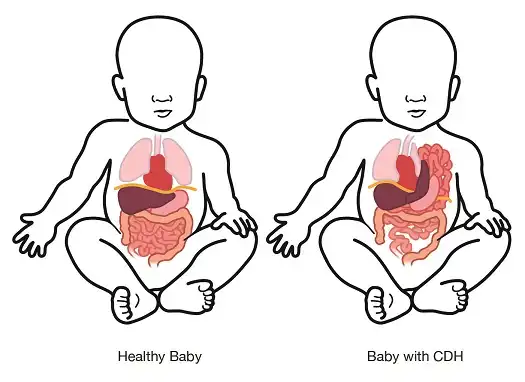
Congenital Diaphragmatic Hernia (CDH) is a serious birth defect in which there is an abnormal opening in the diaphragm, the muscle that separates the chest cavity from the abdominal cavity. This opening allows abdominal organs such as the intestines, stomach, liver, or spleen to move into the chest.
When these organs enter the chest cavity, they can interfere with normal lung development before birth. As a result, babies with CDH often have underdeveloped lungs and breathing difficulties after delivery.
Congenital diaphragmatic hernia is usually diagnosed during pregnancy or shortly after birth. It is a life-threatening condition that requires specialized neonatal and surgical care. Early diagnosis and timely treatment significantly improve outcomes.
The symptoms of CDH are often noticeable immediately after birth.
Common symptoms of congenital diaphragmatic hernia in children include:
The severity of symptoms depends on the size of the diaphragmatic defect and the degree of lung underdevelopment.
CDH develops during fetal growth before birth, when the diaphragm does not form completely.
Possible causes and contributing factors include:
In many cases, the exact cause remains unknown.
This is the most common type of CDH. The defect occurs in the back and side portion of the diaphragm, usually on the left side.
This is a less common type in which the defect is located in the front part of the diaphragm near the breastbone.
A rare type involving the central portion of the diaphragm.
Although not a true hernia, the diaphragm is abnormally thin and elevated, causing symptoms similar to CDH.
Certain factors may increase the risk of CDH.
Risk factors include:
Most babies with CDH do not have a clear, identifiable risk factor.
If not treated appropriately, CDH can lead to serious complications.
The lungs may remain underdeveloped due to compression by abdominal organs.
High blood pressure in the lungs can make breathing difficult.
Newborns may struggle to maintain adequate oxygen levels.
Some children experience feeding and growth problems.
Acid reflux may occur after treatment.
Severe cases may experience delayed growth and development.
Doctors use several tests to diagnose CDH and evaluate lung development.
Diagnosis may include:
Many cases are diagnosed before birth during routine prenatal ultrasounds.
Treatment focuses on stabilizing the baby and repairing the diaphragmatic defect.
After birth, babies often require intensive care support.
This may include:
Once the baby is stable, surgery is performed to repair the diaphragmatic defect.
During surgery:
Selected children may be candidates for thoracoscopic or laparoscopic repair.
Recovery depends on the severity of lung underdevelopment and associated complications.
Parents are usually advised to:
Some children may require long-term respiratory follow-up.
Helpful care measures include:
Long-term monitoring helps identify and manage potential complications.
Parents should seek medical attention if the child develops:
Early medical care helps prevent serious complications.
Yes, CDH is a serious condition that can affect lung development and breathing.
Yes, many cases are diagnosed during prenatal ultrasound examinations.
Yes, surgical repair is usually required to correct the diaphragmatic defect.
Pulmonary hypoplasia refers to underdeveloped lungs, which is a common complication of CDH.
Many children go on to live healthy lives with proper treatment and follow-up care.
Yes, regular follow-up helps monitor lung function, growth, and development.
Dr. Muni Varma is an experienced Pediatric Surgeon specializing in the diagnosis and treatment of Congenital Diaphragmatic Hernia (CDH) and other complex neonatal surgical conditions. With expertise in newborn surgery, pediatric thoracic procedures, and advanced neonatal intensive care coordination, Dr. Varma provides comprehensive child-focused treatment using modern surgical techniques. From prenatal counseling and neonatal stabilization to diaphragmatic repair and long-term follow-up, he focuses on improving breathing, supporting healthy lung development, and ensuring the best possible outcomes for children. Early expert intervention and dedicated post-operative care help children achieve healthier growth and development.