Meningocele in Children: Symptoms, Causes, Diagnosis, and Treatment in Lucknow, India

What is Meningocele in Children?

Meningocele in children is a rare congenital birth defect and a type of spina bifida in which the protective membranes surrounding the spinal cord (meninges) protrude through an opening in the bones of the spine. Unlike myelomeningocele, the spinal cord itself usually remains in its normal position and is not present inside the sac.

The protruding sac is filled with cerebrospinal fluid (CSF) and is usually visible on the baby’s back at birth. Because the spinal cord is generally not affected, many children with meningocele have fewer neurological problems than those with more severe forms of spina bifida. However, early diagnosis and surgical repair are important to prevent infection and protect the spinal nerves.

With timely treatment and appropriate follow-up, many children with meningocele can lead healthy and active lives.
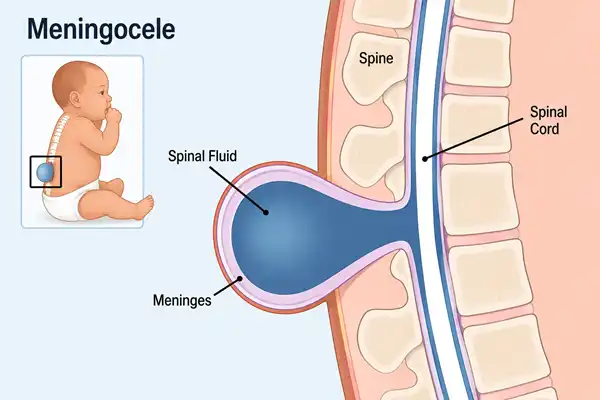
Meningocele in Children

What are the Symptoms of Meningocele in Children?

The symptoms of meningocele depend on the size and location of the spinal defect.

Common symptoms of meningocele in children include:

  • A fluid-filled sac on the back
  • Swelling over the spine
  • Thin skin covering the swelling
  • Leakage of cerebrospinal fluid if the sac ruptures
  • Mild weakness in the legs (in some children)
  • Difficulty with bladder or bowel control (rare)
  • Foot deformities in some cases
  • Back swelling noticed at birth
  • Skin abnormalities over the spine

Many children with meningocele have normal movement and sensation because the spinal cord is usually unaffected.

What Causes Meningocele in Children?

Meningocele develops during early pregnancy when the neural tube fails to close completely.

Common causes and contributing factors include:

  • Incomplete closure of the neural tube
  • Folic acid deficiency during early pregnancy
  • Genetic factors
  • Family history of neural tube defects
  • Maternal diabetes
  • Maternal obesity
  • Certain anti-seizure medications
  • Environmental factors during pregnancy

Most cases occur due to a combination of genetic and environmental factors.

What are the Types of Meningocele?

Meningocele may be classified according to its location on the spine.

  • Cervical Meningocele: The defect occurs in the neck region of the spine.
  • Thoracic Meningocele: The swelling develops in the upper or middle back.
  • Lumbar Meningocele: The defect is located in the lower back and is one of the more common locations.
  • Sacral Meningocele: The swelling occurs near the lower end of the spine close to the pelvis.

The location of the meningocele influences the child’s symptoms and treatment approach.

What are the Risk Factors for Meningocele in Children?

Certain factors increase the risk of meningocele.

Risk factors include:

  • Folic acid deficiency before pregnancy
  • Family history of neural tube defects
  • Previous pregnancy affected by spina bifida
  • Maternal diabetes
  • Maternal obesity
  • Certain anti-epileptic medications
  • High fever during early pregnancy

Taking folic acid before conception and during early pregnancy significantly reduces the risk of neural tube defects.

What Complications Can Meningocele Cause?

Although meningocele is generally less severe than myelomeningocele, complications can still occur.

  • Infection: The sac may rupture and become infected, increasing the risk of meningitis.
  • Cerebrospinal Fluid Leakage: Damage to the sac can cause leakage of spinal fluid.
  • Neurological Problems: Some children may develop weakness or nerve-related symptoms depending on the location of the defect.
  • Bladder and Bowel Dysfunction: A small number of children may experience urinary or bowel control problems.
  • Orthopedic Problems: Some children may develop foot deformities or spinal abnormalities.
  • Hydrocephalus: Although less common than in myelomeningocele, some children may develop hydrocephalus.

How is Meningocele Diagnosed in Children?

Meningocele may be diagnosed before birth or immediately after delivery.

Diagnosis may include:

  • Pregnancy ultrasound
  • Fetal MRI in selected cases
  • Physical examination after birth
  • MRI of the spine
  • CT scan when required
  • Cranial ultrasound in newborns
  • Neurological examination
  • Urodynamic studies if bladder problems are suspected

MRI helps determine whether the spinal cord is involved and guides surgical planning.

What is the Treatment for Meningocele in Children?

Treatment aims to protect the spinal cord, prevent infection, and repair the spinal defect.

Surgical Repair

Surgery is usually performed soon after birth.

During surgery:

  • The fluid-filled sac is carefully opened.
  • The meninges are returned to their normal position.
  • The spinal defect is closed.
  • The skin is repaired to protect the spinal structures.

Treatment of Associated Conditions

If hydrocephalus or orthopedic problems are present, additional treatment may be required.

Rehabilitation

Some children benefit from:

  • Physiotherapy
  • Occupational therapy
  • Regular neurological follow-up

The treatment plan depends on the child’s neurological status.

How is Recovery After Meningocele Surgery?

Most children recover well after surgical repair.

Parents are usually advised to:

  • Keep the surgical wound clean and dry
  • Follow all medication instructions
  • Attend regular follow-up appointments
  • Monitor leg movements and bladder function
  • Watch for fever or fluid leakage from the wound

Most children can gradually return to normal daily activities after recovery.

What Home Care Tips Help Children with Meningocele?

Helpful care measures include:

  • Maintain proper wound care
  • Attend regular neurological check-ups
  • Encourage age-appropriate physical activities
  • Continue physiotherapy if recommended
  • Monitor bladder and bowel habits
  • Ensure a healthy, balanced diet

Regular follow-up helps identify and manage any long-term complications.

When Should Parents See a Doctor?

Parents should seek immediate medical attention if the child develops:

  • Fever
  • Redness or swelling around the surgical site
  • Fluid leakage from the wound
  • Weakness in the legs
  • Difficulty walking
  • Loss of bladder or bowel control
  • Persistent headache
  • Vomiting
  • Seizures

Early medical evaluation helps prevent complications and ensures better recovery.

Frequently Asked Questions (FAQs)

Is meningocele the same as spina bifida?

Meningocele is a type of spina bifida in which only the protective membranes around the spinal cord protrude through the spinal opening.

How is meningocele different from myelomeningocele?

In meningocele, the spinal cord usually remains inside the spinal canal, whereas in myelomeningocele both the spinal cord and nerves protrude through the defect, making it a more severe condition.

Can meningocele be detected before birth?

Yes. Many cases are identified during routine pregnancy ultrasound and may be further evaluated with fetal MRI.

Does every child with meningocele need surgery?

Yes. Surgical repair is usually recommended to close the defect, prevent infection, and protect the spinal structures.

Can children with meningocele live normal lives?

Yes. Most children with isolated meningocele have an excellent prognosis and can lead healthy, active lives after successful surgical treatment.

Can meningocele be prevented?

Taking folic acid before conception and during early pregnancy significantly reduces the risk of neural tube defects, including meningocele.

Why choose Dr. Muni Varma for Meningocele Treatment in Children in Lucknow, India?

Dr. Muni Varma is an experienced Pediatric Surgeon specializing in the diagnosis and treatment of meningocele and other congenital neurological conditions in children. With expertise in neonatal surgery, pediatric spinal disorders, minimally invasive surgical techniques, and multidisciplinary pediatric care, Dr. Muni Varma provides comprehensive treatment tailored to each child’s needs. From early diagnosis and surgical repair to long-term neurological follow-up and rehabilitation, he focuses on preventing complications, preserving nerve function, and supporting healthy growth and development. Early expert care and dedicated follow-up help children achieve the best possible long-term outcomes.

To seek Expert Consultation for Meningocele Treatment in Children in Lucknow, India: