Occipital Encephalocele is a rare congenital birth defect in which part of the brain tissue and its protective coverings (meninges) protrude through an abnormal opening in the occipital bone at the back of the skull. It is a type of neural tube defect (NTD) that develops during the early weeks of pregnancy when the skull does not form completely.
The protruding sac may contain only cerebrospinal fluid and meninges or may also include brain tissue. The severity of the condition depends on the size of the defect and the amount of brain tissue involved.
Occipital encephalocele is usually diagnosed before birth during routine prenatal ultrasound or immediately after delivery. Early surgical treatment and long-term neurological care are essential to protect the brain, prevent infection, and improve developmental outcomes.
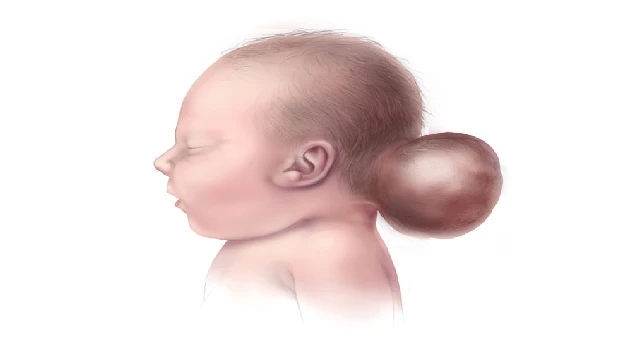
The symptoms vary depending on the size of the encephalocele and the amount of brain tissue involved.
Common symptoms of occipital encephalocele in children include:
Some children with small encephaloceles may have minimal symptoms, while larger defects can cause significant neurological problems.
Occipital encephalocele develops during early fetal development when the bones of the skull fail to close completely.
Common causes and contributing factors include:
In many cases, the exact cause cannot be identified.
Occipital encephaloceles are classified according to the contents of the protruding sac.
Certain factors increase the risk of occipital encephalocele.
Risk factors include:
Adequate folic acid supplementation before conception and during early pregnancy significantly reduces the risk of neural tube defects.
If left untreated, occipital encephalocele may lead to serious complications.
Excess cerebrospinal fluid may accumulate in the brain and require surgical treatment.
Children may experience delays in speech, learning, and motor development.
Abnormal brain development can increase the risk of epilepsy.
Pressure on the brain or associated abnormalities may affect eyesight.
The sac may rupture, increasing the risk of meningitis or other serious infections.
Weakness, poor coordination, or paralysis may occur depending on the amount of brain tissue involved.
Many cases are diagnosed before birth through prenatal screening.
Diagnosis may include:
These investigations help determine the size of the defect, the amount of brain tissue involved, and associated brain abnormalities.
Treatment depends on the size of the encephalocele and the child’s neurological condition.
Surgery is the primary treatment for occipital encephalocele.
During surgery:
The timing of surgery depends on the size of the defect and the baby’s overall health.
Children with hydrocephalus may require:
Some children may benefit from:
A multidisciplinary approach helps maximize the child’s developmental potential.
Recovery depends on the severity of the defect and associated brain abnormalities.
Parents are usually advised to:
Long-term neurological follow-up is important for monitoring growth and development.
Helpful care measures include:
Consistent follow-up care helps improve long-term outcomes.
Parents should seek immediate medical attention if the child develops:
Early medical evaluation can help prevent serious complications.
Occipital encephalocele is a congenital defect in which brain tissue and its coverings protrude through an opening in the back of the skull.
Yes. Most cases are diagnosed during pregnancy through routine ultrasound and may be further evaluated with fetal MRI.
Yes. Occipital encephalocele is one of the neural tube defects that develop during early fetal development.
Most children require surgical repair to protect the brain, prevent infection, and improve neurological outcomes.
The outcome depends on the size of the defect and the amount of brain tissue involved. Many children achieve good quality of life with early surgery, rehabilitation, and regular follow-up.
Taking 400–800 micrograms of folic acid daily before conception and during early pregnancy can significantly reduce the risk of neural tube defects, although not all cases can be prevented.
Dr. Muni Varma is an experienced Pediatric Neurosurgeon and Pediatric Surgeon specializing in the diagnosis and treatment of occipital encephalocele and other complex congenital brain and spinal disorders in children. With expertise in neonatal neurosurgery, skull reconstruction, hydrocephalus management, VP shunt surgery, and multidisciplinary pediatric neurological care, Dr. Varma provides comprehensive treatment using advanced diagnostic techniques and modern surgical methods. From prenatal counseling and early surgical repair to long-term neurological follow-up and rehabilitation, he focuses on protecting brain function, preventing complications, and supporting healthy growth and development. Early expert intervention offers children the best opportunity for improved neurological outcomes and quality of life.