Neuroblastoma is a rare type of childhood cancer that develops from immature nerve cells called neuroblasts. It most commonly starts in the adrenal glands, which are located above the kidneys, but it can also develop in the neck, chest, abdomen, pelvis, or along the spine.
Neuroblastoma mainly affects infants and young children, with most cases diagnosed before the age of five years. The disease can range from slow-growing tumors that may resolve on their own to aggressive cancers that spread to other parts of the body, including the bones, bone marrow, liver, and lymph nodes.
Early diagnosis and specialized treatment are essential to improve outcomes and increase the chances of successful recovery.
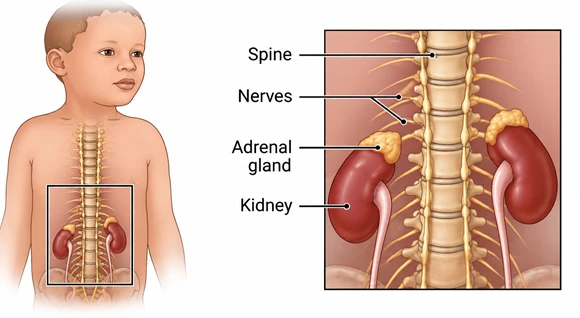
The symptoms of neuroblastoma depend on the location of the tumor and whether it has spread.
Common symptoms of neuroblastoma in children include:
Children with advanced neuroblastoma may develop symptoms due to the spread of cancer to the bones or bone marrow.
Neuroblastoma develops when immature nerve cells grow uncontrollably due to genetic changes.
Common causes and contributing factors include:
In most children, the exact cause is unknown.
Neuroblastoma may be classified according to its location and biological behavior.
1. Adrenal Neuroblastoma: The tumor develops in one of the adrenal glands and is the most common type.
2. Extra-Adrenal Neuroblastoma: The tumor develops outside the adrenal glands, such as in the neck, chest, abdomen, or pelvis.
3. Localized Neuroblastoma: The cancer remains confined to its original location and has not spread.
4. Metastatic Neuroblastoma: The cancer spreads to distant organs such as the bones, bone marrow, liver, or lymph nodes.
5. Stage 4S (MS) Neuroblastoma: A unique form seen mainly in infants where the cancer has spread to limited areas such as the liver, skin, or bone marrow but often has an excellent prognosis with appropriate management.
Certain factors may increase the risk of neuroblastoma.
Risk factors include:
Most children diagnosed with neuroblastoma do not have any identifiable risk factors.
If left untreated, neuroblastoma can lead to serious complications.
The tumor may spread to the bones, bone marrow, liver, lymph nodes, or skin.
Cancer spreading to the bones may cause severe pain and difficulty walking.
Tumors near the spine may compress the spinal cord, causing weakness or paralysis.
Large tumors in the chest may affect normal breathing.
Some tumors produce hormones that increase blood pressure.
Poor appetite and weight loss may affect normal growth and development.
Doctors use several tests to confirm neuroblastoma and determine its stage.
Diagnosis may include:
These investigations help determine the size of the tumor, whether it has spread, and the most appropriate treatment plan.
Treatment depends on the child’s age, tumor stage, risk group, and genetic characteristics.
Surgery is performed to remove as much of the tumor as safely possible. Some localized tumors can be completely removed.
Chemotherapy uses powerful medicines to destroy cancer cells and is commonly used before or after surgery.
Radiation may be recommended for children with high-risk disease or tumors that cannot be completely removed.
Children with high-risk neuroblastoma may require intensive chemotherapy followed by an autologous stem cell transplant.
Targeted immunotherapy helps the body’s immune system recognize and destroy neuroblastoma cells.
Medications such as retinoids may be used after intensive treatment to reduce the risk of recurrence.
Treatment is individualized based on the child’s risk category.
Recovery depends on the stage of the disease and the type of treatment received.
Parents are usually advised to:
Many children require long-term follow-up to monitor their overall health after treatment.
Helpful care measures include:
Supportive care plays an important role in improving recovery and quality of life.
Parents should seek medical attention if the child develops:
Early evaluation can help detect complications or recurrence at an early stage.
Neuroblastoma is a childhood cancer that develops from immature nerve cells, most commonly in the adrenal glands.
Most cases occur in children younger than five years, especially infants and toddlers.
Yes. Neuroblastoma may spread to the bones, bone marrow, liver, lymph nodes, and skin.
Many children can be successfully treated, especially when the disease is diagnosed early. The outcome depends on the child’s age, stage of cancer, and risk group.
No. Some low-risk tumors can be treated with surgery alone, while intermediate- and high-risk cases often require chemotherapy and additional therapies.
Many children recover well and lead healthy lives after successful treatment, although long-term follow-up is important to monitor growth, development, and possible late effects of therapy.
Dr. Muni Varma is an experienced Pediatric Surgeon specializing in the diagnosis and surgical management of neuroblastoma and other childhood tumors. With expertise in pediatric oncology surgery, neonatal surgery, minimally invasive procedures, and multidisciplinary cancer care, Dr. Varma provides comprehensive treatment tailored to each child’s condition. Working closely with pediatric oncologists, radiologists, and critical care specialists, he ensures accurate diagnosis, safe tumor removal, and coordinated long-term care. His child-centered approach focuses on achieving the best possible outcomes while supporting healthy growth, development, and quality of life.