Pediatric Intestinal Atresia Repair Surgery is used to treat intestinal atresia, a congenital condition in which a part of the intestine is completely blocked or does not have a normal opening. As a result, food, milk and digestive contents cannot pass normally through the affected portion of the intestine.
Newborns with intestinal atresia may develop vomiting, abdominal swelling, feeding difficulties and failure to pass stool. The symptoms can appear shortly after birth, and the severity may vary depending on the location and type of intestinal atresia.
Treatment aims to remove or address the blocked portion of the intestine and restore the normal passage of intestinal contents. Surgical treatment is generally required when intestinal atresia causes significant obstruction.
Dr. Muni Varma evaluates children with intestinal obstruction and other gastrointestinal problems and develops a treatment plan based on the child’s symptoms, investigations, age and overall health.
Intestinal atresia is a congenital condition in which a portion of the intestine is completely closed or severely narrowed.
Normally, the intestine provides a continuous passage through which milk and digestive contents move from the stomach through the small intestine and eventually into the large intestine.
In intestinal atresia, this passage is interrupted. The blockage prevents normal movement of intestinal contents and can lead to symptoms of intestinal obstruction after birth.
Intestinal atresia can occur in different parts of the intestine, including the duodenum, jejunum and ileum.
The exact cause of intestinal atresia is not completely understood.
In some cases, it is thought to occur because the blood supply to a developing portion of the intestine is interrupted before birth. This can affect the normal development of that section of bowel.
Intestinal atresia develops during pregnancy and is not usually caused by something the parents did or did not do.
The condition can occur on its own or together with other congenital abnormalities.
Intestinal atresia can be classified according to the structure of the blockage.
Common types include:
The type and location of atresia help the pediatric surgeon determine the most appropriate surgical approach.
The symptoms usually appear soon after birth, although the timing can vary depending on the location and severity of the obstruction.
Common symptoms include:
Green vomiting in a newborn can be a sign of intestinal obstruction and requires urgent medical evaluation.
Parents should seek medical evaluation if a newborn develops persistent vomiting or other symptoms suggesting intestinal obstruction.
Parents should arrange an urgent medical evaluation if a baby has:
These symptoms can have several causes, so proper evaluation is important.
Diagnosis usually requires a combination of clinical assessment and imaging investigations.
Tests may include:
An abdominal X-ray may show patterns suggesting intestinal obstruction.
In some babies, intestinal atresia may be suspected during pregnancy, but not every case is detected before birth.
The exact tests recommended depend on the child’s symptoms and clinical findings.
Treatment is aimed at relieving the intestinal obstruction and restoring the normal passage of intestinal contents.
Before surgery, the baby may require:
Once the baby is appropriately stabilized, surgery is generally performed to address the intestinal blockage.
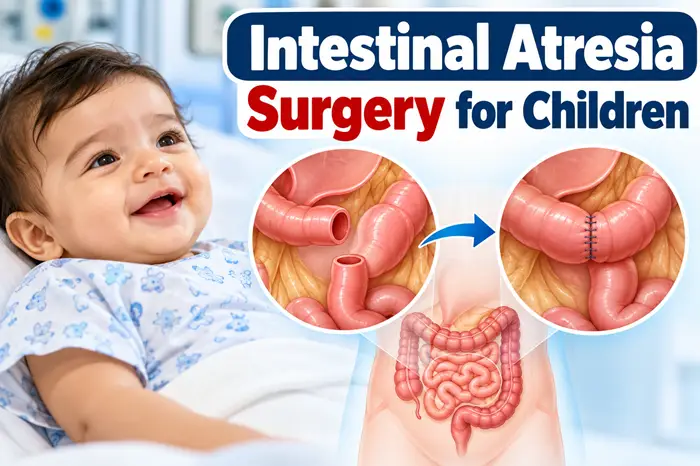
Intestinal atresia repair surgery is performed to restore continuity of the intestine and allow intestinal contents to pass normally.
During surgery, the pediatric surgeon identifies the affected portion of the intestine and carefully evaluates the bowel.
The blocked or abnormal section may be removed, and the healthy ends of the intestine can be joined together using a surgical connection called an anastomosis.
The exact technique depends on the location and type of atresia and the condition of the intestine.
Intestinal anastomosis is the surgical joining of two healthy sections of intestine.
After the blocked portion has been removed or addressed, the surgeon may connect the healthy bowel ends so that digestive contents can continue through the intestine.
In some babies, there may be a significant difference in the size of the bowel segments. The surgical technique is planned according to the individual anatomy of the child.
The goal is to preserve as much healthy intestine as possible while creating a safe and functional intestinal passage.
Not every child with intestinal atresia requires a stoma.
In many cases, the healthy ends of the intestine can be connected during the initial operation.
However, a temporary stoma may sometimes be considered when the condition of the bowel, the extent of the obstruction or other factors make immediate reconnection less suitable.
If a stoma is required, the surgical team can discuss its purpose and whether another procedure may be needed later to restore intestinal continuity.
Intestinal atresia repair is an established surgical treatment, but every operation has potential risks.
Possible complications may include:
The risks vary depending on the type of atresia, the condition of the bowel and the child’s overall health.
Recovery depends on the type of atresia, the surgical procedure performed and the baby’s overall health.
After surgery, the baby is monitored carefully while the intestine gradually begins functioning.
Feeding is usually restarted slowly when the surgical team considers it appropriate.
Parents may receive instructions regarding:
Some babies may require intravenous nutrition for a period while the intestine recovers.
The goal of treatment is to restore the passage of intestinal contents and allow the baby to gradually develop normal feeding and bowel function.
Follow-up is important because some children may experience feeding difficulties, intestinal obstruction or nutritional problems during recovery.
The pediatric surgical team may recommend follow-up assessments based on the child’s recovery, feeding progress and growth.
Yes. Intestinal atresia can initially affect feeding and nutritional intake because the intestinal blockage prevents normal passage of milk and digestive contents.
Babies may require nutritional support during the recovery period.
Once intestinal function improves and feeding becomes established, growth can progress normally in many children. However, growth and nutrition may require closer monitoring when significant portions of the intestine have been affected or removed.
The original area of intestinal atresia does not usually return after it has been surgically repaired.
However, some children may develop postoperative intestinal obstruction, adhesions or other gastrointestinal problems.
Persistent vomiting, abdominal swelling, feeding difficulties or changes in bowel function after surgery should be evaluated by a pediatric medical professional.
Intestinal atresia is a congenital condition in which part of the intestine is completely blocked or does not have a normal opening, preventing intestinal contents from passing normally.
Common symptoms include vomiting, green or bilious vomiting, abdominal swelling, feeding difficulties and failure to pass stool.
Diagnosis may involve clinical examination, abdominal X-ray, contrast imaging and other investigations depending on the baby’s symptoms and condition.
In most cases, intestinal atresia causing significant obstruction requires surgical treatment to restore the normal passage of intestinal contents.
The surgeon identifies the blocked section, evaluates the intestine and, when appropriate, removes the abnormal segment and connects the healthy bowel ends.
Intestinal anastomosis is a surgical connection between two sections of healthy intestine. It may be performed after the blocked portion has been removed.
Not necessarily. Many babies can have the intestine repaired and connected during the initial operation. A temporary stoma may be required in selected complex cases.
Some cases can be suspected during pregnancy through ultrasound, but intestinal atresia is not always detected before birth.
Recovery varies from baby to baby. The hospital stay and feeding progression depend on the type of atresia, the surgery performed and the child’s overall condition.
Many children can have a good long-term outcome after successful intestinal atresia repair, particularly when adequate healthy intestine is preserved and there are no significant associated conditions.
Dr. Muni Varma offers advanced Pediatric Intestinal Atresia Repair Surgery for Children in Lucknow, India. With more than 10 years of experience, he uses a careful and child-focused approach to provide accurate evaluation, appropriate surgical planning, and better long-term care. He offers personalized treatment and follow-up support for children with intestinal atresia and related gastrointestinal conditions, helping parents understand the treatment process and providing quality pediatric surgical care in Lucknow, India.
