Pediatric Omphalocele Repair Surgery is an operation performed to safely return the abdominal organs contained within an omphalocele to the abdominal cavity and repair the abdominal wall opening. The surgical approach depends on the size of the omphalocele, the organs involved, the size of the abdominal cavity, and the baby’s overall condition.
In some babies, the abdominal contents can be returned to the abdomen and the abdominal wall can be closed during a single operation. This is called primary omphalocele repair.
When the omphalocele is large or the abdominal cavity cannot safely accommodate all the organs at once, a staged repair may be recommended. The abdominal contents are gradually moved back into the abdomen before the final abdominal wall closure.
The main goals of surgery are to protect the abdominal organs, restore the abdominal wall, avoid excessive pressure inside the abdomen, and support the child’s recovery and long-term abdominal function.
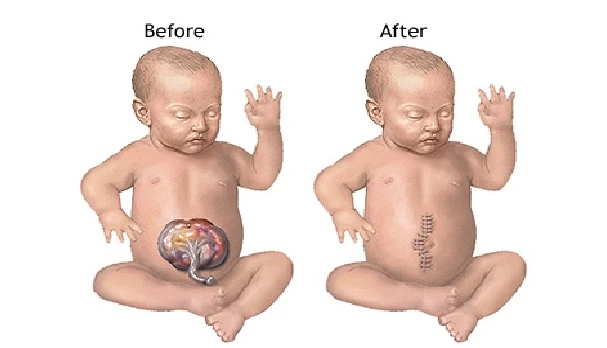
The timing of repair depends on the size of the omphalocele and the baby’s medical condition.
Surgery may be planned when:
Large or giant omphaloceles may require a carefully planned staged approach instead of immediate complete closure.
The main purpose of omphalocele repair is to restore the abdominal wall and safely position the abdominal organs.
The surgery may help:
For larger defects, the repair is planned carefully to prevent excessive pressure after the organs are returned to the abdomen.
Before surgery, the pediatric surgical team evaluates the baby’s overall health, the size of the omphalocele, its contents, and the condition of the abdominal cavity.
During surgery, the surgeon carefully assesses the abdominal organs and determines how much can safely be returned into the abdomen.
Depending on the individual case, the surgeon may:
The exact surgical technique is selected according to the baby’s anatomy and clinical condition.
Primary omphalocele repair involves returning the abdominal contents to the abdominal cavity and closing the abdominal wall during the same operation.
It may be considered when:
The surgeon aims to achieve a secure closure without placing excessive tension on the abdominal wall.
A staged repair may be recommended when the omphalocele is large and immediate closure could increase pressure within the abdomen.
Instead of returning all the abdominal contents at once, they are gradually reduced over time.
The process may involve:
This approach may be particularly useful for babies with a giant omphalocele.
A giant omphalocele contains a significant amount of abdominal contents outside the abdominal cavity.
Repair can be more complex because the abdominal cavity may not initially have enough space for all the organs.
Depending on the baby’s condition, the surgical team may consider:
The safest approach depends on the baby’s anatomy, respiratory condition, associated problems, and the amount of abdominal contents involved.
There is no single age that applies to every baby.
The timing depends on:
Some babies may undergo repair soon after birth, while babies with large or giant omphaloceles may require delayed or staged treatment.
Omphalocele repair is a specialized pediatric surgical procedure. The risks depend on the size of the defect, the organs involved, the baby’s overall health, and the type of repair required.
Careful surgical planning and monitoring are particularly important for large defects because returning the organs too quickly may increase pressure inside the abdomen.
The potential benefits of successful omphalocele repair include:
The expected benefits vary depending on the size of the omphalocele and the child’s overall health.
Like other major pediatric operations, omphalocele repair can have potential risks. These vary from child to child.
Possible complications include:
Large or giant omphaloceles may carry additional challenges because the abdominal cavity may initially have limited space for the abdominal organs.
The pediatric surgical team monitors the child closely to identify and manage complications as early as possible.
Recovery depends on the size of the omphalocele, the type of repair, associated conditions, and the baby’s overall health.
After surgery, the baby may require monitoring in a neonatal or pediatric intensive care unit.
Care may include:
Babies undergoing staged repair may require a longer treatment period before definitive abdominal wall closure.
After discharge, parents should follow the pediatric surgical team’s instructions carefully.
Important aftercare measures may include:
Parents should not apply creams, powders, or other products to the surgical wound unless specifically recommended by the treating team.
Regular follow-up is important after omphalocele repair.
The pediatric surgical team may monitor:
Long-term follow-up may be particularly important for children who had a large or giant omphalocele or required complex reconstruction.
For newborns and infants, activity restrictions are usually individualized according to healing and overall recovery.
As the child grows, the pediatric surgeon may provide specific guidance about:
Children should return to normal activities gradually and only according to the treating surgeon’s recommendations.
There is no single recovery timeline for every child because the extent of surgery and individual healing can differ significantly.
Some babies may take time to establish normal feeding after surgery, particularly after complex repair or when other medical conditions are present.
Feeds are generally introduced according to the baby’s clinical condition and bowel function. The medical team may gradually increase feeding while checking how well the baby tolerates it.
Persistent feeding difficulties should be discussed with the treating medical team.
Many children can develop good abdominal function after successful repair, but long-term outcomes vary.
Children with larger defects or complex repairs may require monitoring of:
The child’s long-term follow-up plan depends on the original defect, surgical repair, and associated medical conditions.
The cost of Omphalocele Repair Surgery in India can vary considerably from one child to another. There is no single fixed cost because treatment may involve different surgical techniques and different levels of neonatal or pediatric intensive care.
Factors that may affect the overall cost include:
Parents should discuss the expected treatment plan and estimated hospital expenses with the treating hospital after the child has been evaluated.
Parents should understand that omphalocele repair is individualized for each baby.
A smaller defect may sometimes be repaired primarily, while a large or giant omphalocele may require staged treatment.
Before surgery, parents should discuss:
The pediatric surgeon can explain the most appropriate approach after evaluating the baby.
Pediatric Omphalocele Repair Surgery is performed to safely return abdominal organs to the abdominal cavity and repair the abdominal wall defect. The repair may be completed in one operation or through a staged approach.
No. The timing depends on the size of the omphalocele, the baby’s condition, the organs involved, and whether immediate closure can be performed safely.
Primary repair involves returning the abdominal contents to the abdominal cavity and closing the abdominal wall during the same operation.
Staged repair gradually returns the abdominal contents into the abdominal cavity before definitive abdominal wall closure. It may be considered for large or giant omphaloceles.
Not necessarily in every case. However, large omphaloceles may require staged treatment and potentially more than one procedure depending on the baby’s anatomy and clinical condition.
Recovery varies depending on the size of the defect, surgical technique, associated conditions, and the baby’s overall health. Some babies may require prolonged neonatal or intensive care.
Yes. Follow-up helps the pediatric surgical team monitor abdominal wall healing, feeding, bowel function, growth, and long-term recovery.
The cost varies depending on the complexity of the surgery, hospital stay, NICU requirements, surgical technique, and any additional treatment needed. An individualized estimate can be provided after evaluation.
Dr. Muni Varma offers advanced Pediatric Omphalocele Repair Surgery for Children in Lucknow, India. With more than 10 years of experience, he uses a careful and child-focused approach to provide accurate evaluation, appropriate surgical planning, and better long-term care. He offers personalized treatment and follow-up support for children with omphalocele, helping parents understand the treatment process and providing quality pediatric surgical care in Lucknow, India.
