Pediatric VP Shunt Surgery is a surgical procedure used to drain excess cerebrospinal fluid (CSF) from the brain into the abdomen. VP stands for ventriculoperitoneal, referring to the pathway between the brain’s ventricles and the peritoneal cavity in the abdomen.
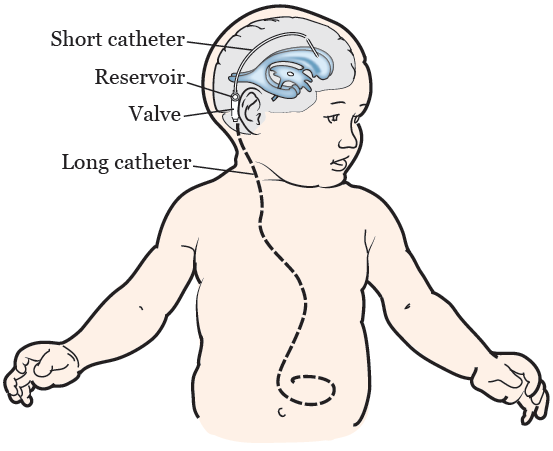
During the procedure, a thin catheter is placed inside one of the brain’s ventricles and connected to a valve and another catheter that runs beneath the skin to the abdomen. The shunt helps control the flow of excess CSF and can reduce pressure within the brain.
VP shunt surgery is one of the commonly used surgical treatments for children who require long-term CSF diversion. The exact type of shunt and valve is selected according to the child’s condition and the neurosurgical assessment.
A VP shunt may be recommended when a child has hydrocephalus and requires surgical drainage of excess CSF.
Surgery may be considered when:
The decision is based on the child’s symptoms, examination, imaging findings, age, underlying cause, and overall neurological condition.
The main goals of VP shunt surgery are to:
The shunt does not necessarily treat the underlying cause of hydrocephalus. Instead, it provides an alternative pathway for CSF drainage.
Before surgery, the child undergoes a detailed neurological evaluation and brain imaging.
During the procedure:
The exact placement and surgical technique depend on the child’s anatomy and the type of shunt selected.
A typical VP shunt has three main components:
This catheter is positioned inside a brain ventricle and allows excess CSF to enter the shunt system.
The valve controls the movement of CSF through the shunt. Different valve systems are available, including fixed-pressure and programmable valves.
The distal catheter travels under the skin and carries CSF into the abdominal cavity, where the fluid can be absorbed naturally.
A fixed-pressure valve is designed to allow CSF drainage at a predetermined pressure range.
The choice of valve depends on the child’s age, clinical condition, hydrocephalus characteristics, and the neurosurgeon’s assessment.
A programmable valve allows the drainage setting to be adjusted externally using a specialized device.
This can provide flexibility when the child’s CSF drainage requirements change over time.
The suitability of a programmable shunt depends on the individual child’s condition and the type of valve available.
VP shunt surgery can be performed in infants, young children, and older children when CSF diversion is required.
The surgical team considers:
The shunt system and catheter length are selected according to the child’s individual anatomy.
VP shunt surgery is a commonly performed procedure, but like any surgery, it carries potential risks.
Children with hydrocephalus require careful monitoring because shunt problems can develop after surgery or later in life.
The surgical team provides parents with instructions about symptoms that may indicate a shunt-related problem and when urgent medical evaluation is necessary.
Potential benefits include:
The outcome depends on the underlying cause of hydrocephalus and the child’s overall neurological condition.
Potential complications of VP shunt surgery include:
Some shunt complications can occur soon after surgery, while others may develop months or years later.
Shunt infection is an important complication that requires prompt medical attention.
Possible warning signs may include:
If a shunt infection is suspected, the child should be evaluated urgently.
A blocked or malfunctioning shunt may prevent adequate CSF drainage.
Symptoms can vary according to the child’s age and may include:
These symptoms require prompt medical evaluation because shunt malfunction can become serious.
Sometimes a shunt can drain more CSF than intended.
Over-drainage may cause headaches or other neurological symptoms and can sometimes result in complications such as subdural fluid collections.
Depending on the type of valve, treatment may involve adjusting the shunt setting or other medical or surgical management.
Children are monitored carefully after surgery.
The medical team may assess:
Hospital stay varies depending on the child’s condition and recovery.
Once the child is stable and the surgical team is satisfied with the recovery, parents receive instructions regarding wound care, medications, activity, and follow-up.
Parents should:
Parents should keep a record of the child’s shunt type and, when available, valve information for future medical visits.
Regular follow-up is important because a VP shunt may require monitoring throughout childhood.
Follow-up may include:
The frequency of follow-up depends on the child’s age, underlying condition, symptoms, and clinical course.
Many children with VP shunts can participate in school, play, and age-appropriate activities after recovery.
However, children with VP shunts require awareness of possible shunt-related problems and appropriate medical follow-up.
Activity recommendations may vary depending on the child’s neurological condition and any other medical problems.
Return to normal activities depends on the child’s recovery and underlying neurological condition.
Light activities may be resumed gradually as advised by the treating team. Contact sports or activities that could cause significant head injury may require individualized guidance.
Children can generally return to school when they are medically stable and comfortable, but the timing should be discussed with the treating team.
A VP shunt may remain in place for many years and, in some children, throughout life.
Long-term care may include monitoring for:
A child who has a VP shunt should be evaluated promptly if new neurological symptoms develop.
Not every VP shunt needs to be routinely replaced.
A shunt may require revision if it becomes blocked, infected, disconnected, broken, or otherwise stops functioning properly.
Some children may undergo one revision during childhood, while others may require multiple procedures. The need for revision varies considerably between children.
VP shunt revision surgery is performed when an existing shunt is no longer functioning properly or has developed a complication.
Depending on the problem, revision may involve:
The exact procedure depends on the cause of shunt malfunction.
The cost of VP shunt surgery in India varies depending on the child’s condition and the complexity of treatment.
Factors that may affect the overall cost include:
Parents should discuss the expected treatment plan and estimated costs with the treating hospital.
Before surgery, parents should discuss:
Understanding these points helps parents respond quickly if a shunt-related problem occurs.
Pediatric VP Shunt Surgery is a procedure that diverts excess cerebrospinal fluid from the brain’s ventricles into the abdomen to help manage hydrocephalus.
A catheter drains CSF from a brain ventricle through a valve and into a catheter that carries the fluid to the abdominal cavity, where it can be absorbed.
A VP shunt may remain in place for many years. Some children never require revision, while others may need surgery if the shunt becomes blocked, infected, disconnected, or otherwise stops working properly.
Yes. Shunt blockage is a recognized complication and can cause symptoms of recurrent hydrocephalus. Prompt medical evaluation is important if concerning symptoms develop.
Symptoms can include headache, vomiting, unusual sleepiness, irritability, poor feeding, seizures, vision changes, or other changes in neurological function. Symptoms vary according to the child’s age and condition.
Many children with functioning VP shunts can attend school normally after recovery. Activity and educational needs should be individualized according to the child’s neurological condition.
Many children can participate in age-appropriate physical activity, but contact sports and activities involving significant head injury may require individualized medical advice.
A VP shunt can provide long-term CSF diversion, but it does not necessarily eliminate the underlying cause of hydrocephalus. Some children may require monitoring or revision surgery in the future.
Dr. Muni Varma offers advanced Pediatric VP Shunt (Hydrocephalus) Surgery for Children in Lucknow, India. With more than 10 years of experience, he uses a careful and child-focused approach to provide accurate evaluation, appropriate surgical planning, and better long-term care. He offers personalized treatment and follow-up support for children requiring surgical treatment for hydrocephalus, helping parents understand the treatment process and providing quality pediatric surgical care in Lucknow, India.
