Appendicitis in children is a condition in which the appendix becomes inflamed and infected. The appendix is a small, finger-shaped pouch attached to the beginning of the large intestine in the lower right side of the abdomen.
When the appendix becomes blocked by stool, enlarged lymph tissue, or other material, bacteria can multiply inside it, leading to inflammation, swelling, and infection. If not treated promptly, the appendix may burst (rupture), causing the infection to spread throughout the abdomen.
Appendicitis is one of the most common causes of emergency abdominal surgery in children. It can occur at any age but is more frequently seen in school-aged children and teenagers. Early diagnosis and timely treatment are essential to prevent complications.
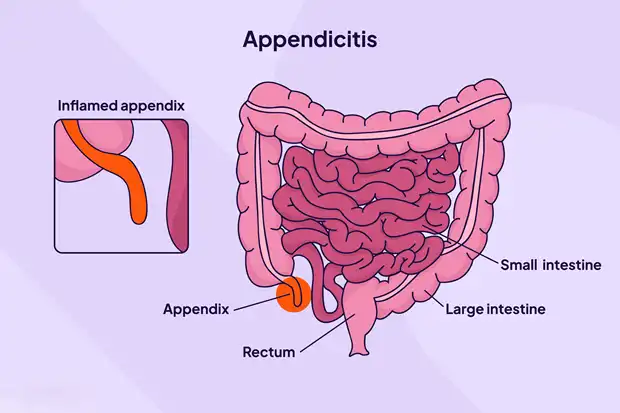
The symptoms of appendicitis may develop suddenly and worsen over time.
Common symptoms of appendicitis in children include:
Young children may not be able to describe their pain clearly, making early diagnosis more challenging.
Appendicitis occurs when the appendix becomes blocked, leading to infection and inflammation.
Common causes of appendicitis in children include:
In many cases, the exact cause cannot be identified.
This is the most common type and develops suddenly. It requires prompt medical treatment and often emergency surgery.
A rare form in which mild inflammation causes recurrent abdominal pain over a longer period.
The appendix is inflamed but has not ruptured.
The appendix has ruptured or formed an abscess, requiring more extensive treatment.
Certain factors may increase the risk of appendicitis.
Risk factors include:
Appendicitis can affect both boys and girls.
If untreated, appendicitis can lead to serious complications.
The inflamed appendix may burst, allowing infection to spread throughout the abdomen.
Infection of the abdominal lining can become life-threatening if not treated immediately.
A pocket of pus may form around the ruptured appendix.
Severe infection may spread into the bloodstream.
Inflammation or infection may temporarily block the intestines.
Complicated appendicitis often requires longer treatment and recovery.
Doctors diagnose appendicitis using a combination of symptoms, physical examination, and imaging tests.
Diagnosis may include:
Ultrasound is often the first imaging test used in children because it avoids radiation exposure.
Treatment depends on whether the appendix has ruptured.
Before surgery, the child may receive:
Laparoscopic appendectomy is the preferred treatment for most children with appendicitis.
Benefits include:
Open surgery may be required if the appendix has ruptured or there is extensive infection.
Children with a ruptured appendix may require:
Most children recover quickly after surgery.
Parents are usually advised to:
Children undergoing laparoscopic surgery often return to school and normal activities within one to two weeks.
Helpful care measures include:
Proper home care supports faster healing and reduces the risk of complications.
Parents should seek immediate medical attention if the child develops:
Early diagnosis of appendicitis in children greatly reduces the risk of a ruptured appendix and serious complications.
Yes, appendicitis is one of the most common causes of emergency abdominal surgery in children.
Most children require surgery. In selected uncomplicated cases, antibiotics may be considered, but surgery remains the standard treatment.
Pain that starts near the belly button and moves to the lower right side, especially with fever and vomiting, should be evaluated immediately.
Yes, laparoscopic appendectomy is a safe and widely performed procedure with excellent outcomes.
Most children recover within 1–2 weeks after laparoscopic surgery, while recovery may take longer after complicated appendicitis.
No. Once the appendix is removed, appendicitis cannot recur.
Dr. Muni Varma is an experienced Pediatric Surgeon specializing in the diagnosis and treatment of appendicitis and other pediatric abdominal emergencies. With expertise in laparoscopic pediatric surgery, neonatal surgery, and minimally invasive procedures, Dr. Varma provides comprehensive child-focused care using advanced diagnostic techniques and modern surgical methods. From early diagnosis and emergency appendectomy to post-operative recovery and follow-up, he focuses on relieving pain, preventing complications, and helping children return to their normal activities as quickly as possible. Early expert care ensures the best possible outcomes for children with appendicitis.