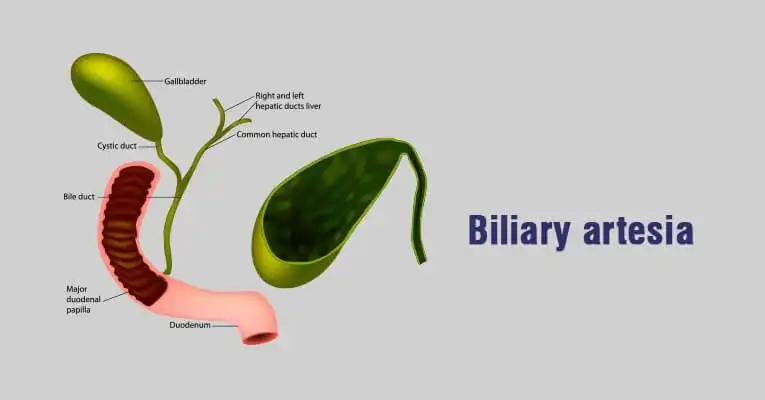
Biliary Atresia is a rare but serious liver disease in which the bile ducts inside or outside the liver become blocked or fail to develop properly. The bile ducts are responsible for carrying bile from the liver to the small intestine, where it helps digest fats and remove waste products from the body.
When bile cannot flow normally, it accumulates in the liver, causing inflammation, scarring, and progressive liver damage. If left untreated, biliary atresia can lead to liver failure during infancy.
Biliary atresia usually develops within the first few weeks after birth and is one of the most common reasons for liver transplantation in children. Early diagnosis and timely surgery are essential to improve liver function and long-term outcomes.
Symptoms of biliary atresia usually appear within the first few weeks of life.
Common symptoms of biliary atresia in children include:
Persistent jaundice with pale stools in a newborn should always be evaluated immediately.
The exact cause of biliary atresia is not completely understood.
Possible causes and contributing factors include:
Most cases occur without a known family history.
Biliary atresia is classified according to the location of the bile duct blockage.
The blockage affects the common bile duct while the upper bile ducts remain open.
The blockage involves the hepatic duct near the liver.
This is the most common and most severe type. The blockage occurs at the level of the porta hepatis, preventing bile from leaving the liver.
Type III accounts for the majority of biliary atresia cases in children.
Although the exact cause remains unknown, certain factors may be associated with biliary atresia.
Risk factors include:
Most babies with biliary atresia do not have identifiable risk factors.
Without timely treatment, biliary atresia can cause serious complications.
Persistent bile buildup gradually scars the liver.
Progressive liver damage can eventually lead to liver failure.
Increased pressure in the liver’s blood vessels may cause enlarged veins and bleeding.
Reduced bile flow affects digestion and absorption of nutrients.
Children may develop deficiencies of fat-soluble vitamins (A, D, E, and K).
Fluid may accumulate inside the abdomen due to advanced liver disease.
Children with liver disease may become more susceptible to infections.
Early diagnosis is critical because surgery is most successful when performed within the first two months of life.
Diagnosis may include:
These investigations help determine whether bile ducts are blocked and assess liver damage.
Treatment depends on the stage of the disease and liver function.
Before surgery, babies may require:
The first-line surgical treatment for biliary atresia is the Kasai portoenterostomy.
During this procedure:
The surgery is most effective when performed before 60 days of age.
If the Kasai procedure is unsuccessful or the liver becomes severely damaged, a liver transplant may be required.
Liver transplantation offers excellent long-term survival for many children with advanced biliary atresia.
Recovery depends on the severity of liver damage and the success of surgery.
Parents are usually advised to:
Long-term follow-up with a pediatric liver specialist is essential.
Helpful care measures include:
Regular medical care helps improve growth and liver health.
Parents should seek immediate medical attention if the child develops:
Early diagnosis of biliary atresia in children significantly improves treatment outcomes.
Yes, biliary atresia is a congenital condition that affects the bile ducts shortly before or after birth.
No. Surgery is necessary to restore bile flow and reduce liver damage.
The Kasai portoenterostomy is a surgery that creates a new pathway for bile to drain from the liver into the intestine.
Not always. Many children benefit from the Kasai procedure, but some may eventually need a liver transplant if liver damage progresses.
Pale or clay-colored stools indicate that bile is not reaching the intestine, which is a key sign of biliary atresia.
Many children lead healthy and active lives after successful treatment, especially with early surgery and regular follow-up. Some may require long-term liver care or transplantation.
Dr. Muni Varma is an experienced Pediatric Surgeon specializing in the diagnosis and treatment of biliary atresia and other complex liver and biliary disorders in children. With expertise in neonatal surgery, pediatric hepatobiliary surgery, and advanced gastrointestinal procedures, Dr. Varma provides comprehensive child-focused care using modern diagnostic techniques and evidence-based treatment. From early diagnosis and Kasai portoenterostomy to long-term follow-up and coordination of liver transplant care when required, he focuses on preserving liver function, preventing complications, and supporting healthy growth and development. Early expert intervention offers the best chance for improved liver health and long-term outcomes.