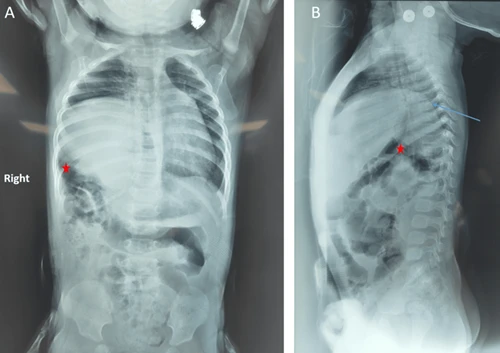
Diaphragm eventration, also called eventration of the diaphragm, is a condition in which a part or the entire diaphragm becomes abnormally thin, weak, and elevated. The diaphragm is the main muscle involved in breathing and normally separates the chest cavity from the abdomen.
In children, diaphragm eventration may be present from birth or develop later due to injury or weakness of the phrenic nerve, which controls diaphragm movement. When the diaphragm is elevated, abdominal organs may move upward into the chest area, reducing the space available for the lung to expand properly.
The severity of diaphragm eventration can vary. Some children may have no symptoms and the condition may be discovered accidentally, while others may experience breathing difficulties, recurrent chest infections, or feeding problems.
The symptoms depend on the severity of diaphragm weakness and how much it affects lung function.
Common symptoms of diaphragm eventration in children include:
Some children with mild diaphragm eventration may not have any noticeable symptoms.
Diaphragm eventration can occur due to abnormal development or weakness of the diaphragm muscle.
Common causes include:
In congenital diaphragm eventration, the exact cause may not always be known.
Diaphragm eventration may be classified based on the extent and cause of diaphragm involvement.
The entire dome of one side of the diaphragm is abnormally elevated. This type can significantly affect lung expansion, especially in infants and young children.
Only a specific portion of the diaphragm is elevated or weakened.
This type is present at birth and occurs due to abnormal development of the diaphragm muscle.
This develops later due to phrenic nerve injury, trauma, surgery, or other conditions affecting diaphragm movement.
Certain factors may increase the risk of diaphragm weakness or elevation.
Risk factors include:
Some children develop diaphragm eventration without any identifiable risk factor.
Significant diaphragm eventration can lead to complications if it affects normal breathing and lung expansion.
An elevated diaphragm can reduce the space available for the lung to expand.
Poor lung expansion and reduced clearance of respiratory secretions may increase the risk of repeated infections.
The affected lung may remain partially compressed, particularly when the diaphragm is significantly elevated.
Infants with significant breathing or feeding difficulties may have poor weight gain.
Older children may experience shortness of breath or fatigue during exercise.
Upward displacement of abdominal organs may sometimes contribute to abdominal discomfort, reflux, or feeding difficulties.
Diagnosis usually begins when an elevated diaphragm is seen on imaging or when a child is evaluated for breathing problems.
Tests may include:
These investigations help determine the position and movement of the diaphragm and rule out other conditions, such as congenital diaphragmatic hernia.
Treatment depends on the child’s symptoms, age, severity of diaphragm elevation, and effect on breathing.
Children with mild diaphragm eventration and no significant symptoms may only require regular monitoring.
Doctors may monitor:
Children with respiratory infections or other related symptoms may require appropriate medical treatment.
Supportive care may include:
Children with significant breathing problems, recurrent infections, poor growth, or severe lung compression may require diaphragm plication.
During diaphragm plication:
The procedure may be performed through open surgery or minimally invasive techniques in selected children.
Most children recover well after successful surgery.
After surgery, the child may require monitoring for:
Parents are usually advised to:
The recovery period can vary depending on the child’s age and overall health.
Helpful home care measures include:
Parents should discuss any new or worsening symptoms with the child’s healthcare team.
Parents should seek medical attention if the child develops:
Severe breathing difficulty or bluish discoloration requires immediate medical attention.
Diaphragm eventration is an abnormal elevation of part or all of the diaphragm due to thinning, weakness, or abnormal development of the diaphragm muscle.
No. In diaphragm eventration, the diaphragm remains intact but is abnormally thin or elevated. In a diaphragmatic hernia, there is an actual opening or defect in the diaphragm through which abdominal organs can move into the chest.
Yes. Congenital diaphragm eventration is present at birth and results from abnormal development of the diaphragm.
No. Children without significant symptoms may be managed with observation and regular follow-up. Surgery is generally considered when the condition causes significant breathing problems, recurrent infections, poor growth, or reduced lung expansion.
Diaphragm plication is a surgical procedure in which the weakened diaphragm is folded and tightened to lower its position and improve lung expansion.
Many children experience significant improvement in breathing and lung expansion after successful diaphragm plication. Long-term outcomes depend on the underlying cause and the child’s overall condition.
Dr. Muni Varma is an experienced Pediatric Surgeon with expertise in the diagnosis and surgical management of congenital and acquired conditions affecting the chest and diaphragm. He provides child-focused evaluation for diaphragm eventration, including assessment of respiratory symptoms, lung expansion, and the need for surgical intervention. For children requiring treatment, the approach focuses on timely diaphragm plication, careful perioperative care, and regular follow-up to support improved breathing, healthy lung development, and overall growth. His experience in neonatal surgery, pediatric thoracic conditions, and minimally invasive pediatric procedures helps ensure comprehensive care tailored to each child’s individual needs.