Gastroschisis is a rare congenital birth defect in which a baby is born with an opening in the abdominal wall, usually to the right of the belly button. Through this opening, the intestines—and sometimes other abdominal organs—protrude outside the body without a protective covering or sac.
Unlike omphalocoele, where the exposed organs are covered by a thin membrane, the intestines in gastroschisis are directly exposed to the amniotic fluid during pregnancy. This exposure can irritate and inflame the bowel, affecting its function after birth.
Gastroschisis is usually detected during routine prenatal ultrasound or immediately after delivery. Prompt surgical treatment and specialized neonatal care are essential to protect the exposed organs and ensure the best possible outcome.
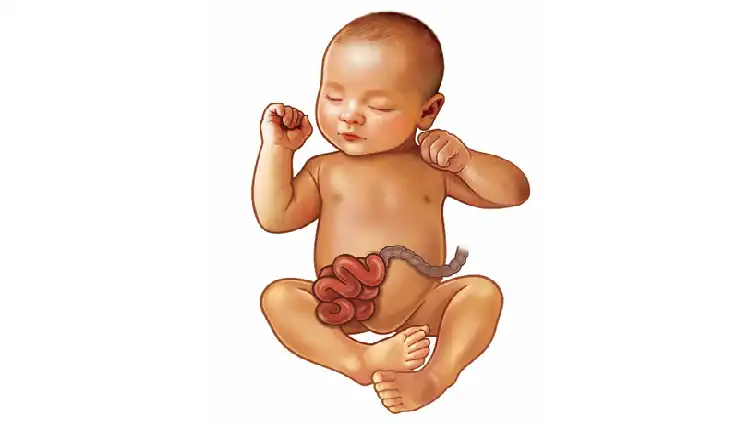
The signs of gastroschisis are typically obvious at birth.
Common symptoms of gastroschisis in children include:
The severity of symptoms depends on the amount of bowel involved and whether there is associated bowel damage.
Gastroschisis develops during early fetal growth when the abdominal wall does not form completely.
Although the exact cause is not fully understood, possible contributing factors include:
In most cases, gastroschisis occurs sporadically and is not inherited.
Gastroschisis can be broadly classified based on the condition of the bowel.
The intestines protrude through the abdominal wall without major damage or additional bowel problems. This type generally has an excellent prognosis after surgery.
In addition to the abdominal wall defect, the baby may have complications such as bowel narrowing (stenosis), bowel blockage (atresia), perforation, or loss of blood supply to part of the intestine.
Complex gastroschisis often requires more extensive treatment and a longer recovery period.
Certain factors may increase the likelihood of gastroschisis.
Risk factors include:
However, many babies with gastroschisis are born without any known risk factors.
If not treated promptly, gastroschisis can lead to serious complications.
Gastroschisis is often diagnosed before birth through routine prenatal screening.
Diagnostic tests may include:
Early diagnosis allows doctors to plan delivery and immediate newborn care.
Treatment focuses on protecting the exposed bowel and repairing the abdominal wall defect.
Soon after delivery, the exposed intestines are carefully covered to prevent fluid loss, heat loss, and infection.
The baby may receive:
Surgery is performed to place the intestines back into the abdomen and close the abdominal wall opening.
If the intestines can safely fit back into the abdomen, the opening is closed in a single operation.
If there is significant swelling or not enough space in the abdomen, a protective silo is placed over the intestines. The organs are gradually returned into the abdomen over several days before final closure.
Recovery depends on the condition of the bowel and the type of repair performed.
Parents are usually advised to:
Some babies may require temporary intravenous nutrition until the intestines function normally.
Helpful care measures include:
Regular monitoring supports healthy growth and development.
Parents should seek immediate medical attention if the child develops:
Prompt medical evaluation can help prevent serious complications.
Yes, gastroschisis is a congenital condition that develops before birth.
Yes, it is often identified during routine prenatal ultrasound examinations.
In gastroschisis, the intestines are exposed without a protective sac, whereas in omphalocoele, the organs are covered by a thin membrane.
Yes, surgical repair is necessary to return the intestines to the abdomen and close the defect.
Many babies recover well and go on to have normal growth and development, especially with early treatment and appropriate follow-up.
Yes, regular follow-up helps monitor nutrition, bowel function, growth, and overall health.
Dr. Muni Varma is an experienced Pediatric Surgeon & Neonatal Surgeon with expertise in treating gastroschisis and other complex neonatal surgical conditions. He provides comprehensive care from prenatal counseling and newborn stabilization to advanced abdominal wall reconstruction and post-operative management. Using modern surgical techniques and a child-centered approach, Dr. Varma focuses on protecting bowel function, minimizing complications, and supporting healthy growth and recovery. Early expert intervention and dedicated follow-up help achieve the best possible outcomes for babies born with gastroschisis.