Posterior Urethral Valve (PUV) in children is a serious congenital urinary tract condition seen in boys in which abnormal tissue folds develop inside the urethra and block the normal flow of urine. The urethra is the tube that carries urine from the bladder out of the body.
In children with PUV, urine cannot pass properly because of this blockage. As a result, pressure builds up inside the bladder and urinary tract, which may affect the kidneys and bladder function over time.
Posterior urethral valve in children is one of the most common causes of urinary obstruction in male infants. In severe cases, it may even affect kidney development before birth.
Many cases are detected during a pregnancy ultrasound, while others are diagnosed after birth because of urinary symptoms or recurrent infections. Early diagnosis and proper treatment are extremely important to protect kidney function and prevent long-term complications.
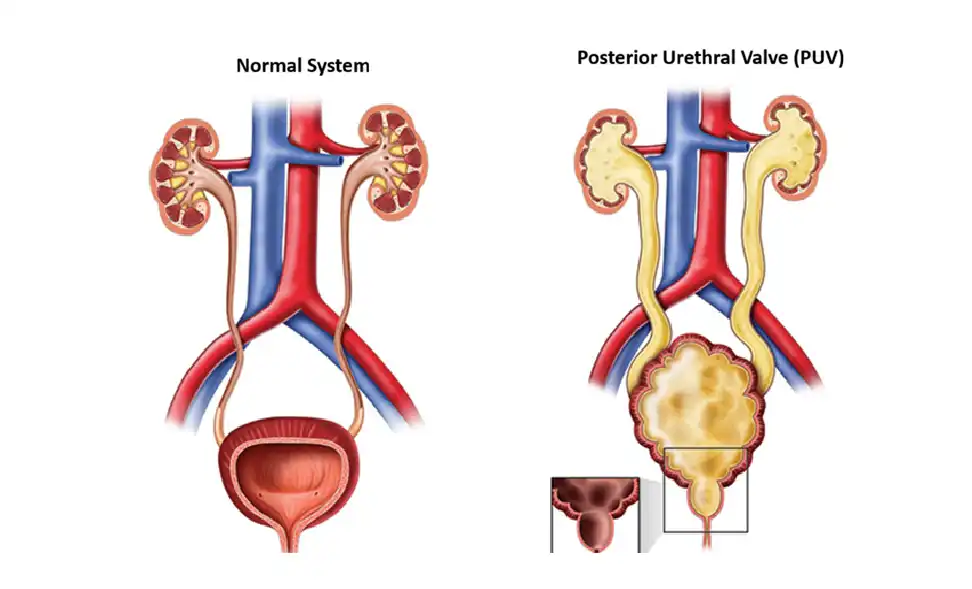
The symptoms of PUV in children may vary depending on the severity of urinary blockage.
Common symptoms of posterior urethral valve in children include:
Severe cases may lead to kidney damage and urinary retention.
Posterior urethral valve develops during fetal growth before birth.
The exact cause is not fully known, but PUV in children occurs due to abnormal development of tissue inside the urethra.
Common causes and contributing factors include:
Posterior urethral valve occurs only in boys because of differences in male urinary anatomy.
Posterior urethral valves are classified based on the location and appearance of the abnormal tissue.
Type 1 is responsible for most clinically significant cases of posterior urethral valve in children.
Certain factors may increase the risk of PUV.
Risk factors include:
Most cases occur randomly without a clear family history.
If untreated, a posterior urethral valve may lead to serious complications.
Doctors use several tests to diagnose PUV in children and evaluate kidney and bladder function.
Diagnosis may include:
VCUG is one of the most important tests used to confirm a posterior urethral valve in children.
Treatment focuses on relieving urinary blockage and protecting kidney function.
A urinary catheter may initially be inserted to drain urine and reduce bladder pressure.
Endoscopic Surgery is the main treatment for PUV in children. A small scope is inserted into the urethra, and the abnormal valve tissue is cut or removed.
In severe cases, a temporary opening may be created in the abdomen to help urine drain.
Children with kidney damage may require additional treatment and long-term monitoring.
Some children may need bladder training, medications, or catheter support later.
Recovery depends on the severity of the condition and kidney involvement.
Parents are usually advised to:
Long-term follow-up is important because some children may continue to have bladder or kidney problems.
Helpful care measures include:
Early treatment and proper monitoring improve long-term outcomes.
Parents should seek immediate medical attention if the child develops:
Early diagnosis of posterior urethral valve in children helps protect kidney function.
Yes, PUV can seriously affect the bladder and kidneys if untreated.
No, posterior urethral valve occurs only in boys.
Yes, many cases are diagnosed during a pregnancy ultrasound.
Yes, most children require endoscopic surgery to remove the valve obstruction.
Yes, severe urinary blockage may gradually damage the kidneys.
Yes, regular follow-up is important to monitor bladder and kidney health.
Dr. Muni Varma is an experienced Pediatric Surgeon and Pediatric Urologist providing advanced diagnosis and treatment for Posterior Urethral Valve (PUV) and other complex pediatric urinary tract conditions. With expertise in managing urinary obstruction, hydronephrosis, bladder dysfunction, and pediatric kidney disorders, Dr. Varma offers child-focused care using modern diagnostic and minimally invasive surgical techniques. From early diagnosis to advanced endoscopic valve ablation and long-term bladder management, he focuses on protecting kidney function, improving urinary drainage, and preventing complications. Early expert treatment and regular follow-up help children achieve better urinary health and long-term well-being.