Sacrococcygeal Teratoma (SCT) is a rare congenital tumor that develops at the base of the spine (tailbone or coccyx). It is the most common tumor present at birth (congenital tumor) and arises from germ cells, which are immature cells capable of developing into different types of body tissues such as skin, hair, bone, muscle, fat, and cartilage.
Most sacrococcygeal teratomas are benign (non-cancerous) at birth. However, if left untreated, some may become malignant (cancerous) as the child grows older. The tumor may be located outside the baby’s body, inside the pelvis, or extend into the abdomen.
Sacrococcygeal teratoma is often detected during pregnancy through routine ultrasound or immediately after birth. Early diagnosis and complete surgical removal provide an excellent chance of cure and help prevent serious complications.
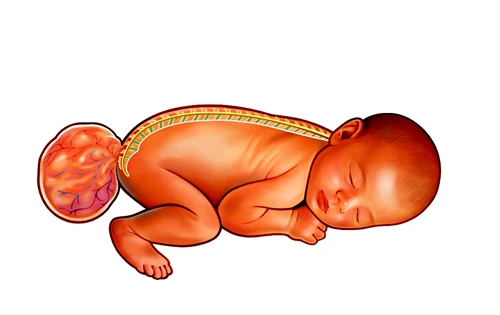
The symptoms depend on the size and location of the tumor.
Common symptoms of sacrococcygeal teratoma in children include:
Large tumors detected before birth may affect the baby’s heart and lead to serious complications during pregnancy.
Sacrococcygeal teratoma develops before birth due to abnormal growth of primitive germ cells near the coccyx.
Common causes and contributing factors include:
The exact cause remains unknown in most children.
Sacrococcygeal teratomas are commonly classified using the Altman Classification based on their location.
The tumor is almost completely outside the body and attached to the tailbone.
The tumor is mainly outside the body but has a significant portion extending into the pelvis.
The tumor is visible externally, but most of it extends into the pelvis and abdomen.
The tumor is completely inside the pelvis and cannot be seen externally. This type is often diagnosed later because there is no visible swelling.
Although the exact cause is unknown, certain factors may be associated with sacrococcygeal teratoma.
Risk factors include:
Most babies with sacrococcygeal teratoma do not have identifiable risk factors.
If left untreated, sacrococcygeal teratoma may cause serious complications.
Large, highly vascular tumors can divert a significant amount of blood, placing extra strain on the baby’s heart during pregnancy.
Severe heart failure before birth may cause fluid accumulation in different parts of the baby’s body.
Large tumors may increase the risk of preterm labor.
Large external tumors may rupture during delivery, causing severe bleeding.
Large tumors can compress the rectum, bladder, or urinary tract.
Although most tumors are benign at birth, delayed treatment increases the risk of malignant transformation.
Many cases are diagnosed before birth through prenatal screening.
Diagnosis may include:
These investigations help determine the size, location, blood supply, and nature of the tumor.
Treatment depends on the size, location, and pathology of the tumor.
Surgery is the primary treatment for sacrococcygeal teratoma.
During surgery:
Complete excision of both the tumor and coccyx provides the best chance of cure.
Children with malignant sacrococcygeal teratomas may require chemotherapy after surgery depending on the pathology report.
Regular follow-up includes:
Long-term follow-up is important because recurrence can occur, especially if the coccyx is not removed completely.
Most children recover well after successful surgery.
Parents are usually advised to:
Most children can gradually resume normal activities after complete recovery.
Helpful care measures include:
Regular follow-up helps detect recurrence at an early stage.
Parents should seek immediate medical attention if the child develops:
Early medical evaluation helps prevent complications and detect recurrence promptly.
Sacrococcygeal teratoma is a congenital germ cell tumor that develops at the base of the baby’s spine near the tailbone.
Most sacrococcygeal teratomas diagnosed at birth are benign, but some may become malignant if left untreated.
Yes. Most cases are diagnosed during routine prenatal ultrasound, and fetal MRI may be used for detailed evaluation.
Removing the coccyx significantly reduces the risk of the tumor coming back after surgery.
Yes. Recurrence is uncommon after complete removal of both the tumor and coccyx, but regular follow-up with AFP testing and imaging is important.
Yes. Most children recover completely after successful surgery and go on to lead healthy, active lives, especially when the tumor is diagnosed and treated early.
Dr. Muni Varma is an experienced Pediatric Surgeon specializing in the diagnosis and surgical treatment of sacrococcygeal teratoma (SCT) and other complex congenital tumors in children. With expertise in neonatal surgery, pediatric oncology surgery, minimally invasive procedures, and advanced tumor excision, Dr. Varma provides comprehensive child-focused care using modern diagnostic and surgical techniques. From prenatal counseling and newborn evaluation to complete tumor and coccyx removal, long-term follow-up, and coordinated multidisciplinary care, he focuses on achieving complete cure while preserving normal bowel, bladder, and neurological function. Early expert treatment and regular monitoring help children achieve excellent long-term outcomes and healthy development.