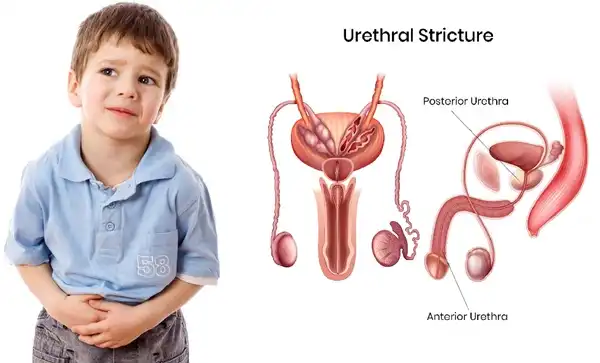
Urethral Stricture in children is a condition in which the urethra becomes narrow due to scar tissue formation. The urethra is the tube that carries urine from the bladder out of the body.
When narrowing occurs, urine cannot flow properly, leading to difficulty during urination and other urinary problems. Urethral stricture may occur due to congenital abnormalities, injury, infection, previous surgery, or catheter use.
The narrowing can affect different parts of the urethra and may range from mild to severe. Early diagnosis and proper treatment are important to prevent complications involving the bladder and kidneys.
The symptoms of urethral stricture may develop gradually depending on the severity of narrowing.
Common symptoms of urethral stricture in children include:
Some children may develop repeated urinary infections because of poor urine flow.
Urethral stricture in children develops when scar tissue forms inside the urethra.
Common causes of urethral stricture in children include:
In some children, the exact cause may not be identified.
1. Congenital Urethral Stricture in Children: This type is present from birth due to abnormal development of the urethra.
2. Acquired Urethral Stricture in Children: This develops later due to infection, injury, surgery, or inflammation.
3. Anterior Urethral Stricture: The narrowing occurs in the front portion of the urethra.
4. Posterior Urethral Stricture: The narrowing affects the deeper part of the urethra closer to the bladder.
5. Short Segment Stricture: Only a small portion of the urethra becomes narrowed.
6. Long Segment Stricture: A larger portion of the urethra is affected.
Certain factors may increase the risk of developing urethral stricture.
Risk factors include:
If untreated, a urethral stricture may lead to serious complications.
Poor urine flow increases the risk of infections.
Severe narrowing may completely block urine flow.
Increased pressure may weaken the bladder over time.
Long-standing obstruction can affect kidney function.
Incomplete bladder emptying may lead to stone formation.
Urine backup may cause swelling of the kidneys.
Doctors use several tests to diagnose urethral stricture and determine the severity of narrowing.
Diagnosis may include:
These tests help identify the location and length of the stricture.
Treatment depends on the severity, location, and length of narrowing.
Very mild cases may only require monitoring.
Special instruments may be used to gently widen the narrowed urethra.
A small scope is inserted into the urethra, and scar tissue is cut to improve urine flow.
In severe or recurrent cases, reconstructive surgery may be required to permanently repair the urethra.
Temporary catheter drainage may be needed in severe urinary blockage.
Most children recover well after proper treatment.
Parents are usually advised to:
Regular follow-up is important because strictures may sometimes recur.
Helpful care measures include:
Early treatment helps prevent long-term urinary complications.
Parents should seek medical advice if the child develops:
Early diagnosis of urethral stricture in children helps protect bladder and kidney function.
Mild cases may be manageable, but severe narrowing can affect urine flow and kidney health.
Yes, some strictures may return and require follow-up treatment.
No, mild cases may improve with dilatation or minor procedures.
Urethroplasty is reconstructive surgery used to permanently repair the narrowed urethra.
Yes, severe, untreated obstruction may gradually affect kidney function.
Yes, modern pediatric urology treatments are generally safe and effective.
Dr. Muni Varma is an experienced Pediatric Surgeon and Pediatric Urologist providing advanced diagnosis and treatment for urethral stricture and other pediatric urinary tract conditions. With expertise in managing congenital urinary abnormalities, urinary obstruction, and reconstructive pediatric urology procedures, Dr. Varma offers child-focused care using modern diagnostic and surgical techniques. From minimally invasive treatment to advanced urethral reconstruction, he focuses on restoring normal urine flow, preventing complications, and ensuring healthy urinary function. Early expert care and proper follow-up help children recover safely and maintain long-term urinary health.