Oral propranolol therapy is a medical treatment used to manage certain infantile haemangiomas, which are non-cancerous growths of blood vessels that commonly appear during infancy. Propranolol belongs to a group of medicines called beta-blockers. It helps reduce the growth and blood flow of suitable haemangiomas and can gradually improve their size, colour, and appearance.
Infantile haemangiomas may develop on the skin or deeper tissues and can appear as red, raised, or bluish swellings. Many remain small and resolve naturally over time, but some require medical treatment because of their location, rapid growth, ulceration, risk of scarring, or interference with important functions such as vision, breathing, feeding, or hearing.
Oral propranolol is generally considered the first-line systemic treatment for infantile haemangiomas that require medication. Treatment must be prescribed and monitored by an appropriately qualified doctor because propranolol can affect heart rate, blood pressure, and blood glucose levels.
Dr. Muni Varma offers pediatric surgical consultation in Lucknow for children who require assessment of vascular lesions and discussion of appropriate treatment options. The decision to use oral propranolol depends on the child’s diagnosis, age, medical history, and the characteristics of the haemangioma.
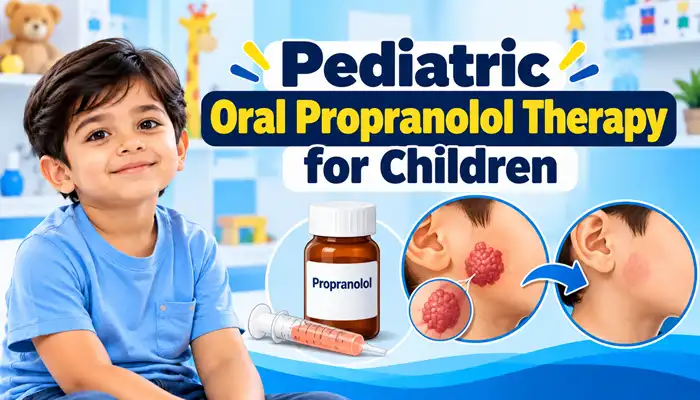
Not every infantile haemangioma requires medication. A doctor may recommend oral propranolol when a haemangioma is likely to cause complications or has already started affecting the child’s health or development.
Treatment may be considered when a haemangioma:
A doctor evaluates the lesion before recommending treatment. Small, uncomplicated haemangiomas may only require observation and regular follow-up.
The main goal of oral propranolol therapy is to control the growth of an infantile haemangioma and reduce the risk of complications.
Treatment may help to:
The response varies from child to child. Some haemangiomas respond quickly, while others require longer treatment and ongoing assessment.
Oral propranolol therapy is a medical treatment rather than a surgical procedure. It involves assessing the child, prescribing an appropriate dose, monitoring the response, and adjusting treatment when necessary.
The general process includes:
Parents should never start, increase, reduce, or stop propranolol without medical guidance.
Propranolol blocks beta-adrenergic receptors and affects several processes involved in blood vessel activity. In infantile haemangiomas, its effects include changes in blood flow and signals that contribute to blood vessel growth.
Parents may notice that a haemangioma becomes less intensely red or softer during treatment. Gradual reduction in its thickness and size may follow.
The medicine does not produce identical results in every child, and some haemangiomas may leave behind loose skin, altered pigmentation, or other residual changes after treatment.
Treatment planning depends on the haemangioma’s size, location, growth pattern, and potential complications, as well as the child’s overall health.
Before treatment, the doctor may assess:
Some children may require additional evaluation before treatment, particularly when the haemangioma is extensive or associated with other abnormalities.
The duration of treatment varies according to the child’s age, the haemangioma’s response, and the risk of regrowth after the medicine is stopped.
Treatment may continue for several months, with regular reviews to assess improvement and determine whether therapy remains necessary. The doctor may adjust the regimen as the child gains weight.
Stopping treatment too early can sometimes be followed by renewed growth of the haemangioma. The timing and method of discontinuation should therefore be decided by the treating doctor.
Oral propranolol is an established treatment for appropriate infantile haemangiomas, but it is not suitable for every child. Careful assessment and monitoring are important because the medicine can affect the cardiovascular system, breathing, and blood glucose regulation.
Possible side effects include:
Children with certain heart conditions, very low heart rates or blood pressure, asthma or a history of bronchospasm, and other specific medical conditions may not be suitable candidates.
Parents should seek urgent medical attention if the child develops unusual drowsiness, seizures, breathing difficulty, fainting, or other severe symptoms during treatment.
Feeding is particularly important during propranolol therapy because the medicine can increase the risk of low blood glucose when a child is not eating adequately.
Parents should:
The exact instructions depend on the prescribed formulation and the child’s treatment plan.
When appropriately prescribed, oral propranolol may provide several benefits:
The extent of improvement depends on the lesion and the child’s response. Medication cannot guarantee complete disappearance of every haemangioma.
Regular follow-up is essential to monitor treatment effectiveness and identify side effects.
During follow-up, the doctor may assess:
Parents may be advised to take periodic photographs to document changes in the haemangioma. The treating doctor will determine the appropriate review schedule.
The best treatment depends on the type, size, location, and severity of the haemangioma.
Possible approaches include:
Many uncomplicated infantile haemangiomas do not require active treatment. Regular observation helps track growth and identify complications early.
Topical timolol may be considered for selected small, thin, superficial haemangiomas. It is not appropriate for every lesion and should only be used following medical advice.
Laser therapy may be useful for selected superficial blood vessel changes or certain residual skin changes. Its role depends on the lesion and treatment objective.
Surgery may be considered in selected cases, such as when a haemangioma causes functional problems, leaves significant residual tissue, or does not respond adequately to other treatments. It is not necessary for most haemangiomas that respond well to medical therapy.
The cost of oral propranolol therapy in Lucknow depends on the prescribed formulation, treatment duration, medical assessments, follow-up visits, and any additional investigations required.
The overall cost may vary according to the child’s clinical needs and the complexity of the haemangioma. Parents should obtain an individualized estimate after consultation.
It is a medical treatment that uses propranolol, a beta-blocker, to control certain infantile haemangiomas that require systemic medication.
Yes. Oral propranolol is an established first-line systemic treatment for infantile haemangiomas that require medication. The degree of improvement varies according to the lesion and the child’s response.
No. Many infantile haemangiomas can be monitored without medication. Treatment is considered when a lesion poses a risk of complications, affects important functions, ulcerates, or may cause significant lasting changes.
Some haemangiomas show early changes in colour or softness, followed by gradual reduction in size. The response and time required for improvement vary between children.
Yes, when the treating doctor has prescribed the medicine and provided clear instructions. Parents must follow the prescribed dose, feeding precautions, and monitoring plan.
Parents should follow the specific instructions provided by the treating doctor about withholding propranolol during vomiting or poor feeding. They should contact the medical team if the child remains unwell or cannot feed normally.
Yes. Some haemangiomas may regrow after treatment ends. The doctor will assess the response and decide when and how treatment should be discontinued.
Parents should arrange an evaluation if a haemangioma grows rapidly, develops ulcers, bleeds repeatedly, or affects vision, breathing, or feeding. Severe drowsiness, seizures, fainting, or breathing difficulty during treatment requires urgent medical attention.
Dr. Muni Varma offers Oral Propranolol Therapy for Children in Lucknow, India. With more than 10 years of experience, he uses a careful and child-focused approach to provide appropriate evaluation, treatment planning, and follow-up care. He helps parents understand available treatment options, medication precautions, monitoring requirements, and expected progress for children with infantile haemangiomas.
