Pediatric Gastrostomy is a surgical procedure in which an opening is created through the abdominal wall into the stomach to allow feeding directly into the stomach through a gastrostomy tube. It is performed for children who cannot take sufficient nutrition by mouth or who need long-term enteral feeding.
The procedure may be performed using an open surgical approach, laparoscopic surgery, or an endoscopic technique known as percutaneous endoscopic gastrostomy (PEG), depending on the child’s age, anatomy, medical condition, and suitability for each method.
A gastrostomy tube helps deliver prescribed formula, fluids, and medicines directly into the stomach when oral feeding is unsafe or inadequate. The pediatric surgical team also guides parents on tube care, feeding methods, and follow-up after the procedure.
A child may need gastrostomy when feeding by mouth does not provide adequate nutrition or cannot be performed safely.
Gastrostomy may be considered for children who have:
The decision is made after assessing the child’s nutritional needs, swallowing safety, digestive function, and expected duration of tube feeding.
The main purpose of gastrostomy is to provide reliable access for nutrition and hydration when oral feeding is insufficient or unsafe.
Potential goals include:
Gastrostomy does not necessarily mean that a child will never eat by mouth again. Some children continue oral feeding when it is safe, while others may rely mainly or entirely on tube feeding.
The procedure is performed under anesthesia or sedation appropriate to the chosen technique and the child’s condition.
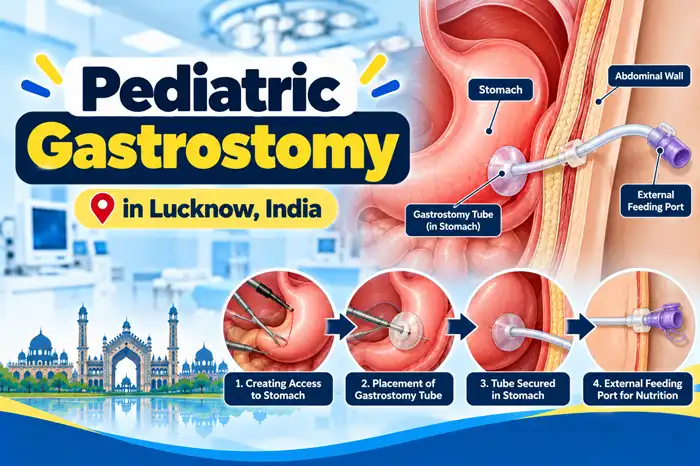
The surgeon creates an opening between the abdominal wall and the stomach and places a gastrostomy tube through it. The tube is secured to help prevent displacement, and the team checks that it is positioned and functioning appropriately.
The general steps may include:
The exact steps vary depending on whether the procedure is open, laparoscopic, or endoscopic.
Open gastrostomy involves making an incision in the abdomen to access the stomach directly.
The surgeon creates an opening in the stomach and brings the gastrostomy tube through the abdominal wall. The tube is secured, and the stomach is attached to the abdominal wall as appropriate for the technique.
Open gastrostomy may be considered when endoscopic placement is unsuitable, when the child’s anatomy requires direct surgical access, or when another abdominal procedure is needed at the same time.
Laparoscopic gastrostomy is performed through small abdominal incisions using a camera and specialized instruments.
The surgeon views the stomach and surrounding structures, selects a suitable placement site, and inserts the gastrostomy tube under direct visualization.
Potential advantages in selected children include smaller incisions and the ability to inspect the abdominal cavity. The suitability of laparoscopy depends on the child’s anatomy, previous surgeries, medical stability, and the surgeon’s assessment.
Percutaneous endoscopic gastrostomy (PEG) is a technique in which an endoscope is passed through the mouth into the stomach. The stomach is accessed through the abdominal wall, and a feeding tube is placed with endoscopic guidance.
PEG may be suitable for children who require longer-term tube feeding and whose anatomy permits safe endoscopic placement.
It is not appropriate for every child. Certain anatomical abnormalities, previous surgeries, or other medical factors may make a surgical approach more suitable.
The choice between open gastrostomy, laparoscopic gastrostomy, and PEG depends on the individual child.
The surgical team may consider:
No single approach is best for every child.
Gastrostomy is generally planned when long-term or sustained stomach feeding is expected and the child is medically suitable for the procedure.
The timing depends on nutritional status, the underlying condition, swallowing assessment, and whether the child needs stabilization before surgery. In some situations, feeding access may be required during a hospital admission; in others, the procedure can be scheduled in advance.
Gastrostomy is an established method of providing enteral nutrition, but it carries risks like any surgical or endoscopic procedure.
The level of risk depends on the child’s overall health, underlying condition, anatomy, and the technique used. The medical team evaluates anesthesia risks, feeding requirements, and potential complications before proceeding.
Parents should receive clear instructions about tube use, feeding, cleaning, and when to seek medical attention.
Potential benefits include:
The benefits depend on the child’s condition and overall care plan.
Possible complications include:
Severe abdominal pain, increasing abdominal swelling, fever, significant bleeding, breathing difficulty, or a newly displaced tube—especially soon after placement—requires prompt medical advice. If the tube comes out before the tract has matured, it should not be reinserted by an untrained person because it may enter the wrong space.
After the procedure, the child is monitored for pain, bleeding, infection, and other complications. The healthcare team determines when feeding can begin and how it should be increased.
Recovery may include:
The hospital stay varies according to the procedure, the child’s medical condition, and whether additional treatment is needed.
Parents and caregivers should follow the instructions provided by the treating team.
Important points include:
Do not give feeds or medicines through the tube unless the child’s team has confirmed that they are suitable for tube administration.
Regular follow-up helps the team assess the child’s nutrition, growth, and tube function.
Follow-up may include:
Tube replacement should be carried out according to the clinical team’s instructions. The timing and method depend on the tube type and whether the gastrostomy tract has matured.
Some children can continue eating and drinking by mouth if swallowing is safe and their clinical team approves it. The gastrostomy tube provides additional nutrition or fluids when needed.
Children with swallowing difficulties or aspiration risk may require specific feeding restrictions and assessment by a qualified feeding or swallowing team.
Gastrostomy alone does not determine whether oral feeding is safe.
A gastrostomy tube may be removed when the child can consistently meet nutritional and hydration needs by mouth, and the healthcare team considers removal appropriate.
Before removal, the team evaluates growth, feeding safety, and the underlying condition. The opening may close naturally after removal, but some children develop a persistent opening that requires further treatment.
Parents should never remove the tube without guidance from the treating team.
The cost of Pediatric Gastrostomy varies depending on the technique, the child’s medical needs, and the hospital.
Factors that may affect the total cost include:
Parents should request an individualized estimate from the hospital after the procedure and care plan have been discussed.
Before the procedure, parents should understand why tube feeding is recommended, how feeds will be given, and what care will be required at home.
Useful questions to discuss with the team include:
Pediatric gastrostomy is a procedure that creates an opening from the abdominal wall into the stomach so that nutrition, fluids, and certain medicines can be given through a feeding tube.
A child may need a gastrostomy tube when oral feeding is unsafe or does not provide enough nutrition and hydration, particularly when longer-term tube feeding is expected.
PEG uses an endoscope to guide feeding-tube placement through the abdominal wall. Surgical gastrostomy uses a surgical approach, which may be open or laparoscopic. The appropriate method depends on the child’s anatomy and clinical needs.
Not always. Some children need tube feeding for a limited period, while others require it for longer-term nutritional support. Removal depends on feeding safety, nutritional progress, and the treating team’s assessment.
Bathing and site care depend on the tube type and how recently it was placed. Parents should follow the specific instructions provided by the healthcare team.
Contact the treating team immediately, particularly if the tube was recently placed. Do not attempt reinsertion unless you have been specifically trained and instructed to do so for that child’s tube and situation.
No. Some children continue oral feeding if it is safe. Others need restrictions because of swallowing difficulties or aspiration risk. The feeding plan should be individualized.
Dr. Muni Varma offers advanced Pediatric Gastrostomy for children in Lucknow, India. With more than 10 years of experience, he uses a careful and child-focused approach to provide appropriate evaluation, surgical planning, and follow-up care. He helps parents understand feeding access options, tube care, and the treatment process for children who require gastrostomy.
