Hypospadias is a condition present from birth in which the opening of the penis is not located at the usual position at the tip. Instead, the opening may be found on the underside of the penis. In some children, the penis may also curve downward, especially during an erection.
Parents often notice hypospadias during the newborn examination. In mild cases, the urinary opening may be only slightly away from the tip. In more noticeable cases, it can be located further down the penis and may be associated with significant curvature.
Pediatric hypospadias repair surgery is performed to place the urinary opening in a more appropriate position, correct penile curvature when needed, and allow the child to pass urine in a more normal direction.
At the pediatric surgery practice of Dr. Muni Varma, children with hypospadias are evaluated individually because the type and severity of hypospadias can vary considerably from one child to another.
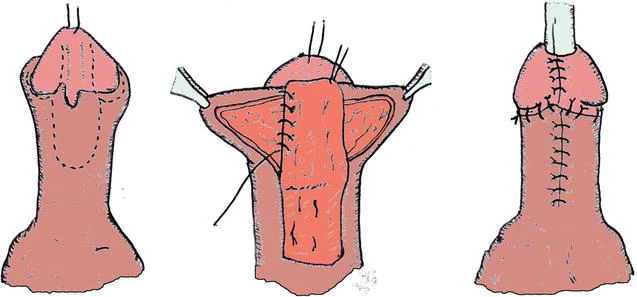
Hypospadias is a congenital condition affecting the development of the penis. The urethra, which carries urine outside the body, does not open at the normal location at the end of the penis.
The opening can be:
Some children have only a small difference in the position of the opening, while others may have penile curvature, an incomplete foreskin, or other changes in the appearance of the penis.
Hypospadias is not caused by anything the parents did after the child was born. It develops during pregnancy as the penis forms.
Not every child has exactly the same form of hypospadias. The need and timing of surgery depend on the position of the urethral opening, the degree of curvature and the overall development of the penis.
Surgery may be considered when:
The pediatric surgeon examines the child and discusses whether repair is appropriate and what type of procedure may be required.
The purpose of surgery is not simply to change the appearance of the penis.
A properly planned repair aims to:
The exact goals can vary depending on how severe the hypospadias is.
The surgical technique depends mainly on the location of the urethral opening and whether the penis is curved.
During the operation, the surgeon carefully assesses the urethral tissue and penile curvature. The urethral opening may then be brought towards the tip using an appropriate repair technique.
If curvature is present, it may also need to be corrected.
In some children, the existing tissues are sufficient for reconstruction. In others, additional tissue may be required to complete the repair.
Because hypospadias has many different forms, there is no single operation that is suitable for every child.
The repair technique is selected according to the child’s anatomy.
Tubularized Incised Plate, commonly called TIP repair, is one of the techniques used for selected cases of hypospadias. It involves creating a new urethral tube using the available urethral plate.
It may be suitable for certain distal forms of hypospadias.
Mathieu repair is another technique that can be used in selected distal hypospadias cases. It uses local penile tissue to reconstruct the urethral opening and channel.
More complex hypospadias may require a staged approach rather than trying to complete everything in one operation.
In a two-stage repair, reconstruction is performed in separate surgical procedures with time allowed for healing between stages.
The decision depends on factors such as the position of the urethral opening, penile curvature and available tissue.
Hypospadias repair is commonly performed during infancy or early childhood, although the appropriate timing can vary from child to child.
The child’s general health, severity of hypospadias, penile size, curvature and surgical requirements are considered when planning the procedure.
If your child has already grown older without treatment, it does not necessarily mean that repair is no longer possible. Older children can also be evaluated by a pediatric surgeon.
Hypospadias repair is a commonly performed pediatric reconstructive procedure, but like any surgery, it carries potential risks.
Possible complications can include:
The likelihood of complications depends on the severity of hypospadias, the surgical technique, tissue quality and other individual factors.
Parents should discuss the expected benefits and possible risks with the pediatric surgeon before surgery.
Children usually need some time at home after surgery for healing.
The surgeon may advise parents about:
A urinary catheter or stent may be used in some repairs. If one is placed, parents will receive instructions about caring for it until it is removed.
The recovery period is different for every child and depends on the type of repair performed.
Follow-up is an important part of hypospadias treatment.
The pediatric surgeon checks healing and observes the urinary opening and urine stream. In some cases, additional follow-up may be useful as the child grows.
Parents should contact the treating team if they notice problems such as:
Early evaluation can help identify complications and allow appropriate treatment.
Yes. Depending on the position of the urethral opening, some children may have a urinary stream that sprays, points downward or is difficult to direct.
Children with more severe hypospadias may find it difficult to urinate while standing.
Repair aims to create a more functional urinary passage, although the final result depends on the individual anatomy and healing after surgery.
The answer depends on the severity of the condition and whether significant penile curvature is present.
One important aim of repairing significant curvature during childhood is to support normal penile function later in life. However, outcomes can vary, and parents should discuss the individual case with the pediatric surgeon.
A diagnosis of hypospadias can be worrying for parents, especially when they hear that their baby may need surgery.
It is important to remember that hypospadias varies widely. A mild distal form and a complex proximal form are not managed in exactly the same way.
Before surgery, parents can discuss:
Having these questions answered can make the treatment process easier to understand.
Yes. Hypospadias is a congenital condition, meaning it develops before birth.
No. The decision depends on the location of the urinary opening, penile curvature, urinary function and other individual factors.
Yes. Pediatric hypospadias repair is performed under anesthesia so that the child does not experience pain during the operation.
The duration varies according to the complexity of the repair and the surgical technique used. Your pediatric surgeon can provide a more accurate estimate after examining the child.
A catheter or urinary stent may be used in some types of hypospadias repair. Whether it is needed depends on the procedure.
The original condition does not usually “come back,” but complications such as recurrent curvature or a fistula can occur in some children and may require further treatment.
Yes. Children who were not treated during infancy can still be evaluated. The surgical plan depends on the child’s anatomy and previous treatment, if any.
Hypospadias repair can improve appearance, but treatment also has functional goals such as improving the urinary opening and correcting significant penile curvature.
Parents can seek an evaluation once hypospadias is identified. An early consultation allows the surgeon to assess the condition and discuss the appropriate timing and treatment options.
Dr. Muni Varma offers advanced Hypospadias Repair Surgery for Children’s in Lucknow, India. With more than 9 years of experience, he uses a careful and child-focused approach to provide accurate evaluation, appropriate surgical planning, and better long-term care. He offers personalized treatment and follow-up support for children with hypospadias, helping parents understand the treatment process and providing quality pediatric surgical care in Lucknow, India.
