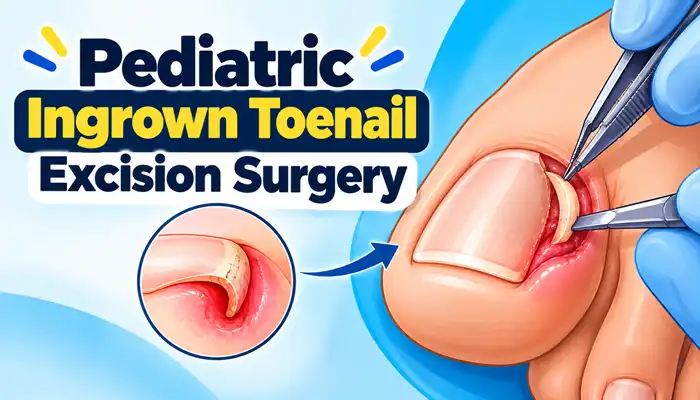
Pediatric ingrown toenail excision surgery is a minor surgical procedure performed to remove the portion of a toenail that grows into the surrounding skin, causing pain, redness, swelling, or infection. The condition most commonly affects the big toe and may make walking, wearing shoes, or participating in sports uncomfortable for children.
When an ingrown toenail does not improve with conservative treatment or repeatedly returns, a pediatric surgeon may recommend surgical removal of the affected nail edge. Depending on the severity of the condition, the procedure may involve partial nail avulsion, treatment of the nail matrix to reduce recurrence, or removal of inflamed tissue around the nail.
Dr. Muni Varma provides pediatric surgical consultation in Lucknow to evaluate ingrown toenails in children and determine an appropriate treatment plan based on their age, symptoms, and clinical findings.
Surgery may be recommended when an ingrown toenail causes persistent discomfort or complications despite appropriate non-surgical care.
A child may require surgical evaluation for:
Mild ingrown toenails may improve with conservative measures. The decision to perform surgery depends on the severity of symptoms, the presence of infection, and whether the condition keeps recurring.
The primary goal of surgery is to remove the nail portion pressing into the surrounding skin and relieve the associated discomfort.
The procedure may help to:
The surgical approach is selected according to the child’s condition rather than using the same procedure for every patient.
The procedure usually involves examining the affected toe, numbing the area when appropriate, and carefully removing the problematic part of the nail.
The general steps may include:
The entire toenail does not need to be removed in every case. The exact procedure depends on the clinical findings and the surgeon’s assessment.
Partial nail avulsion involves removing only the affected edge of the toenail. It preserves the remaining nail and may be suitable for selected cases where the embedded portion is responsible for the symptoms.
For children with recurrent ingrown toenails, the surgeon may remove the affected nail edge and treat the corresponding part of the nail matrix. This approach can reduce recurrence, although the nail may still grow back abnormally in some cases.
If excessive inflamed tissue develops beside the nail, the surgeon may treat or remove some of this tissue as part of the procedure.
Complete toenail removal may be considered in selected circumstances, but it is not necessary for every ingrown toenail. The choice depends on the extent of nail involvement and the underlying clinical problem.
Children require an individualized approach that considers their age, comfort, symptoms, and previous treatment history.
Before surgery, the surgeon evaluates:
Younger children may need additional support to remain comfortable during the procedure. The anesthesia plan is determined according to the child’s needs and the clinical setting.
Ingrown toenail excision is generally a minor procedure, but complications can occur. The surgeon discusses the expected benefits, limitations, and potential risks with the parents before treatment.
Possible complications include:
Following wound-care instructions and attending recommended follow-up visits can help monitor recovery.
When surgery is appropriate, potential benefits include:
The results depend on the severity of the condition, the procedure selected, and the child’s healing response.
Recovery varies according to the extent of nail removal and whether the nail matrix or surrounding tissue has also been treated.
Mild discomfort, swelling, or a small amount of drainage may occur after surgery. Parents should follow the treating team’s instructions for dressing care and activity restrictions.
General aftercare may include:
Children can gradually return to routine activities as comfort improves and the surgeon advises. Sports, swimming, and activities that may injure or contaminate the wound should be avoided until the treating team confirms they can safely resume them.
Proper nail care can help reduce the risk of another ingrown toenail.
Parents should encourage children to:
Repeated ingrown toenails may require reassessment to determine whether treatment of the nail matrix would be beneficial.
Parents should arrange a medical evaluation if their child develops persistent pain, repeated ingrown toenails, significant swelling, or discharge around the nail.
Prompt medical attention is important if the child develops fever, increasing pain, or redness spreading beyond the affected toe. Children with conditions that affect circulation or wound healing may need additional assessment.
Parents should not attempt to cut deeply into an ingrown nail or drain an infected area at home, as this may worsen the injury or infection.
The cost of pediatric ingrown toenail excision surgery in Lucknow depends on the severity of the condition, the procedure required, the type of anesthesia, the clinical setting, and follow-up care.
A straightforward partial nail avulsion may have different costs from a recurrent case requiring nail-matrix treatment or management of inflamed tissue. An individualized estimate can be provided after clinical examination.
It is a procedure performed to remove the part of a child’s toenail that grows into the surrounding skin and causes pain, inflammation, or infection.
No. Mild cases may improve with conservative care. Surgery may be considered when symptoms persist, the condition is severe, or the ingrown toenail repeatedly returns.
When local anesthesia is used, the toe is numbed during surgery. Some discomfort may occur afterward as the anesthetic wears off. Parents should follow the treating team’s advice about pain management.
Usually, only the affected nail edge needs to be removed. Complete nail removal is reserved for selected situations based on the child’s condition.
Yes. Recurrence is possible. Treating the relevant portion of the nail matrix during surgery may reduce the likelihood of the problematic nail edge growing back.
Recovery depends on the procedure performed and the child’s healing response. The surgeon will advise when the child can resume normal footwear, sports, and other activities.
Parents should seek an evaluation if the child has persistent pain, repeated ingrown toenails, significant swelling, or discharge. Fever or redness spreading beyond the toe requires prompt medical attention.
Dr. Muni Varma offers Pediatric Ingrown Toenail Excision Surgery for Children in Lucknow, India. With more than 9 years of experience, he uses a careful and child-focused approach to provide appropriate evaluation, surgical planning, and follow-up care. He helps parents understand the surgical approach, available treatment options, and expected recovery for children requiring ingrown toenail surgery.
