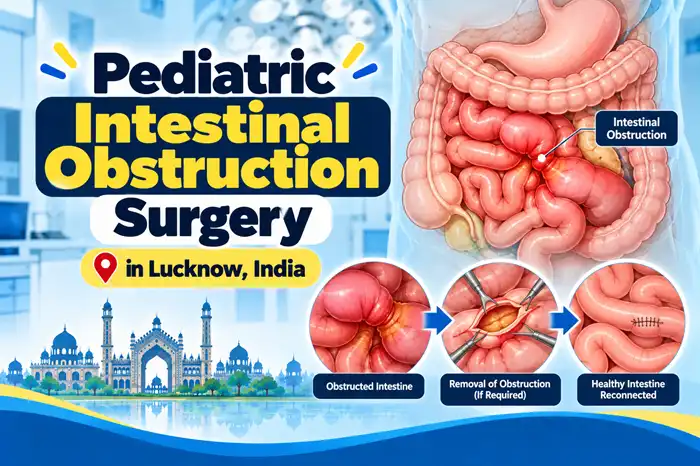
Pediatric Intestinal Obstruction Surgery is a surgical procedure used to remove or correct a blockage in a child’s intestine so that food, fluids, and intestinal contents can pass normally through the digestive tract. Depending on the cause and location of the obstruction, surgery may involve releasing a blockage, dividing abnormal bands, correcting a twisted intestine, removing a damaged section of bowel, or creating a temporary stoma when the intestine needs time to heal.
The type of surgery depends on the child’s age, overall condition, location of the obstruction, severity of bowel damage, and underlying cause. Some children can be treated with minimally invasive surgery, while others may require open abdominal surgery, particularly when there is severe obstruction, perforation, or compromised blood supply to the bowel.
For children requiring surgical treatment, careful evaluation and timely intervention are important to protect healthy bowel and prevent serious complications.
A child may require surgery when the intestinal blockage cannot be safely managed with non-surgical treatment or when there is a risk of damage to the bowel.
Surgery may be considered when:
In newborns, surgery may be required urgently for certain congenital intestinal blockages.
The main purpose of surgery is to restore intestinal passage and protect the bowel.
Depending on the underlying problem, surgery may be performed to:
The exact procedure is selected after clinical assessment and appropriate imaging or other investigations.
The child is given general anesthesia before surgery.
The surgeon then accesses the abdomen through either an open incision or minimally invasive ports, depending on the situation.
During the operation, the surgeon:
The exact steps vary considerably depending on the cause of obstruction.
Open surgery involves making an abdominal incision to directly access the intestine.
It may be preferred when:
Open surgery allows the surgeon to carefully examine the entire abdominal cavity and treat complex bowel problems.
In selected children, laparoscopic surgery may be possible.
Small incisions are made through which a camera and specialized surgical instruments are inserted.
Potential advantages include:
However, laparoscopic surgery is not suitable for every child. Severe bowel distension, extensive adhesions, perforation, unstable condition, or complex obstruction may require open surgery.
Adhesiolysis is the surgical release or division of abnormal scar tissue bands called adhesions.
Adhesions can sometimes develop after previous abdominal surgery and may cause the intestine to become kinked, compressed, or trapped.
During adhesiolysis, the surgeon carefully releases the adhesions while protecting the intestine and surrounding structures.
If part of the intestine has been severely damaged or has lost its blood supply, the affected section may need to be removed.
This is called bowel resection.
When appropriate, the two healthy ends of the intestine are joined together. This connection is called an anastomosis.
The surgeon decides whether immediate anastomosis is safe based on:
Sometimes the intestine cannot be safely reconnected during the initial operation.
In such situations, the surgeon may create an ileostomy or colostomy.
A stoma temporarily brings part of the intestine to the abdominal wall so that stool can leave the body into a collection bag.
A stoma may be temporary and can sometimes be closed during a later operation once the child has recovered and the bowel is considered safe for reconnection.
Some children are born with structural abnormalities that can cause intestinal obstruction.
Depending on the condition, surgery may involve:
The surgical technique depends on the specific anatomical problem.
When the intestine twists around its supporting tissue and causes obstruction, urgent surgery may be necessary.
The surgeon may:
Volvulus can compromise the blood supply to the intestine, so prompt assessment is important.
In some newborns, a portion of the intestine may be completely blocked or significantly narrowed.
Surgery may involve removing the abnormal segment and joining healthy bowel ends.
Depending on the baby’s condition and bowel health, the surgeon may perform primary anastomosis or use a staged approach when necessary.
The timing depends on the severity and cause of the obstruction.
Some intestinal obstructions require emergency surgery, particularly when there is:
Other obstructions may allow time for stabilization, investigations, and planned surgery.
In newborns, the timing is also influenced by feeding status, hydration, electrolyte balance, respiratory condition, and overall stability.
Pediatric intestinal obstruction surgery is a commonly performed type of pediatric abdominal surgery, but the level of risk depends on the cause and severity of the obstruction.
Emergency surgery can carry higher risks when the bowel is severely damaged, perforated, infected, or has lost its blood supply.
Before surgery, the pediatric surgical team evaluates the child’s condition and stabilizes dehydration, electrolyte abnormalities, infection, and other medical problems whenever possible.
Potential benefits include:
Like other abdominal surgeries, intestinal obstruction surgery has potential risks.
These may include:
The risk varies according to the child’s condition and the complexity of the operation.
Recovery depends on the severity of the obstruction and the type of surgery performed.
Initially, the child may receive fluids and nutrition through an intravenous line while the intestine recovers.
Feeding is usually restarted gradually when the surgical team determines that bowel function is returning.
Hospital recovery may involve:
Children who undergo emergency surgery or extensive bowel resection may require longer hospital monitoring.
Parents should follow the surgical team’s instructions regarding:
Parents should seek medical advice if the child develops persistent vomiting, increasing abdominal swelling, fever, worsening pain, poor feeding, reduced urine output, wound discharge, or other concerning symptoms after surgery.
Follow-up helps the pediatric surgeon monitor recovery and bowel function.
During follow-up, the doctor may assess:
Children who have undergone extensive bowel surgery may require longer-term nutritional and growth monitoring.
The timing varies according to the operation and the child’s recovery.
Light activity is generally resumed gradually, while strenuous physical activity should be avoided until the surgical team confirms that it is safe.
Children who have undergone uncomplicated surgery may return to normal activities sooner than children who required extensive bowel resection, emergency surgery, or treatment for serious complications.
Many children can return to normal eating and bowel function after successful treatment.
However, long-term recovery depends on:
When a significant length of bowel has to be removed, nutritional problems and short bowel syndrome can occur and may require specialized long-term care.
Recurrence depends on the original cause.
For example, adhesions may form after abdominal surgery and can cause obstruction in the future. Some congenital conditions may also require additional procedures or long-term monitoring.
Parents should seek medical evaluation if a child who has previously undergone obstruction surgery develops recurrent vomiting, abdominal distension, severe abdominal pain, or difficulty passing stool or gas.
The cost of Pediatric Intestinal Obstruction Surgery varies depending on the cause and complexity of the procedure.
Factors that can affect the overall cost include:
Parents should discuss the expected treatment plan and estimated hospital expenses with the treating hospital.
Parents should understand that intestinal obstruction is not one single surgical condition. The operation is selected according to what is causing the blockage and whether the bowel remains healthy.
Important questions to discuss with the pediatric surgeon include:
It is surgery performed to remove or correct a blockage in a child’s intestine and restore normal passage of intestinal contents.
Some intestinal obstructions can become emergencies, particularly when the bowel is twisted, loses its blood supply, perforates, or becomes severely infected. Prompt medical assessment is important when obstruction is suspected.
Yes, laparoscopic surgery may be possible in selected children. However, open surgery may be necessary for severe, complicated, or emergency cases.
Not always. If the intestine remains healthy, the surgeon may only need to release the obstruction. If a section is severely damaged or has lost its blood supply, bowel resection may be necessary.
A stoma is not required in every case. It may be considered when the bowel cannot be safely reconnected during the initial operation.
Recovery varies depending on the cause of obstruction, type of surgery, bowel condition, and whether complications occur. The surgical team will provide an individualized recovery plan.
Many children can gradually return to normal feeding after bowel function recovers. Children who undergo extensive bowel resection may require specialized nutritional monitoring.
It can, depending on the underlying cause. Adhesions and certain congenital or structural problems can sometimes lead to recurrent obstruction.
Dr. Muni Varma offers advanced Pediatric Intestinal Obstruction Surgery in Lucknow, India. With more than 10 years of experience, he uses a careful and child-focused approach to provide accurate evaluation, appropriate surgical planning, and better long-term care. He offers personalized treatment and follow-up support for children with intestinal obstruction, helping parents understand the treatment process and providing quality pediatric surgical care in Lucknow, India.
