Pediatric Undescended Testis (Orchiopexy) Surgery is a procedure used to bring a testicle that has not moved into the scrotum into its proper position. An undescended testis is usually noticed during a baby’s examination after birth, although some children are diagnosed later during a routine check-up.
In some babies, the testis moves down into the scrotum naturally during the first few months. When it remains undescended, a pediatric surgeon can assess the child and decide whether surgery is needed. Dr. Muni Varma evaluates the child’s age, the location of the testis and other individual factors before planning treatment.
Normally, the testicles develop inside the abdomen before gradually moving down into the scrotum during pregnancy. When one or both testicles do not complete this movement, the condition is known as an undescended testis or cryptorchidism.
An undescended testis may be located in the:
Sometimes the testis cannot be felt during a physical examination. This is known as a non-palpable testis.
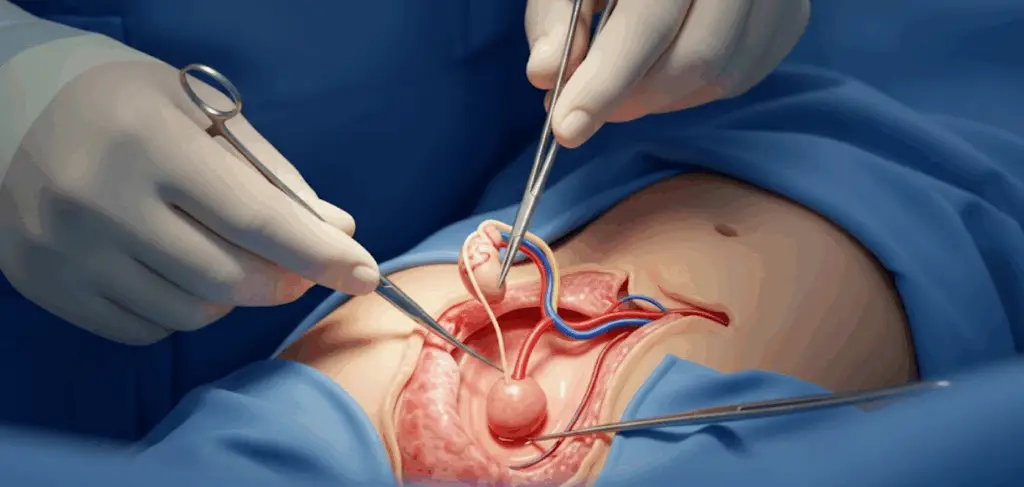
Orchiopexy is the surgical procedure used to place an undescended testis inside the scrotum and secure it there.
The type of operation depends on where the testis is located. A testis that is present in the groin may be brought down through a conventional surgical approach. A testis located inside the abdomen may require laparoscopic surgery or, in some cases, a staged procedure.
The surgeon chooses the approach based on the child’s individual anatomy.
Not every undescended testis needs immediate surgery because some testes descend naturally during early infancy.
If the testis remains undescended, the child should be evaluated by a pediatric surgeon. Surgery may be recommended to:
The timing of treatment depends on the child’s age and the clinical findings.
The first step is usually a physical examination. The pediatric surgeon checks whether the testis is present in the scrotum, groin or another location.
The doctor also determines whether the testis can be brought down into the scrotum during examination.
Ultrasound is not always necessary for diagnosing an undescended testis. When the testis cannot be felt, further assessment may be considered based on the child’s individual situation.
The surgical technique depends on the location of the testis.
When the testis is located in the groin, the surgeon makes an incision and carefully frees the testis and its supporting structures. The testis is then brought down into the scrotum and secured in position.
When the testis is located higher inside the abdomen, laparoscopic surgery may be considered. In some children, the testis may need to be brought down in stages.
The goal is to place the testis safely inside the scrotum while protecting its blood supply and surrounding structures.
Laparoscopic orchiopexy may be used when an undescended testis cannot be felt during examination or is located inside the abdomen.
A small camera is used to look inside the abdomen and identify the testis. Depending on its position and blood supply, the surgeon may be able to bring it down during the same procedure or may recommend a staged repair.
If the testis does not descend naturally during infancy, treatment is generally planned during early childhood rather than waiting until the child is much older.
The exact timing is decided after examining the child and considering factors such as the location of the testis and the child’s overall health.
If an older child is diagnosed with an undescended testis, parents should still arrange an evaluation. Treatment may remain possible depending on the condition of the testis.
Orchiopexy is a commonly performed pediatric operation, but every surgical procedure has potential risks.
Possible complications include:
The risk can be different for each child and may be higher in more complex cases, such as an intra-abdominal testis.
Children generally recover well after orchiopexy. The recovery period depends on the type of procedure and the child’s age.
Parents are usually given instructions regarding:
The child should be observed for increasing pain, significant swelling, fever, wound discharge or other unusual symptoms after surgery.
An undescended testis can be associated with problems related to testicular development and future fertility. It also carries a higher risk of testicular cancer later in life compared with a normally descended testis.
Moving the testis into the scrotum does not remove every long-term risk, but it allows the testis to be examined more easily as the child grows.
Early evaluation therefore helps parents understand the condition and the appropriate treatment options.
An undescended testis can affect fertility potential, particularly when both testes are undescended or treatment is significantly delayed.
Orchiopexy can help place the testis in a more appropriate environment, but surgery cannot guarantee normal fertility in every child.
Some undescended testes descend naturally during the first few months after birth.
However, if the testis remains undescended beyond the expected period of spontaneous descent, it should be assessed by a pediatric surgeon.
A retractile testis is different. It may move between the scrotum and groin because of the normal cremasteric reflex and may not require the same treatment as a persistently undescended testis.
It is a condition in which one or both testicles have not moved into the scrotum as expected.
Orchiopexy is surgery performed to bring an undescended testis into the scrotum and secure it in place.
Some testes descend naturally during early infancy. Persistent undescended testes need evaluation to determine whether surgery is appropriate.
When spontaneous descent does not occur, orchiopexy is generally planned during early childhood. The appropriate timing should be determined by the pediatric surgeon.
Yes. Undescended testis can affect one or both testicles.
It can affect future fertility potential, particularly when both testes are affected or treatment is delayed.
Not in every case. Physical examination often provides important information, while additional investigations may be considered in selected children.
Yes. An older child can still be evaluated. The treatment approach depends on the child’s age, the location of the testis and its condition.
Recovery varies depending on the type of surgery and the individual child. The surgeon will provide specific instructions about returning to normal activities.
Dr. Muni Varma offers advanced Pediatric Orchiopexy Surgery / Undescended Testis Surgery for Children in Lucknow, India. With more than 9 years of experience, he uses a careful and child-focused approach to provide accurate evaluation, appropriate surgical planning, and better long-term care. He offers personalized treatment and follow-up support for children with undescended testis, helping parents understand the treatment process and providing quality pediatric surgical care in Lucknow, India.
