Thoracoscopic congenital diaphragmatic hernia (CDH) repair is a minimally invasive surgical procedure used to correct a defect in the diaphragm through small incisions in the chest. A thoracoscope, which is a thin instrument with a camera, allows the surgeon to view the surgical area while using specialised instruments to return displaced abdominal organs to their proper position and repair the opening in the diaphragm.
The diaphragm is a muscular structure that separates the chest from the abdomen and plays an important role in breathing. In congenital diaphragmatic hernia, the diaphragm does not form completely during fetal development. As a result, organs such as the stomach, intestines, or sometimes the liver may move into the chest and compress the developing lungs.
Thoracoscopic CDH repair in children is considered for carefully selected patients after assessment of their respiratory function, cardiovascular stability, anatomy, and the size of the diaphragmatic defect. Although the procedure offers the potential benefits of smaller incisions, it is not suitable for every child. Open surgical repair may be the safer option in babies with severe respiratory problems, significant pulmonary hypertension, or large diaphragmatic defects.
A pediatric surgeon may consider surgical repair when a child has a confirmed congenital diaphragmatic hernia that requires correction.
The choice of thoracoscopic repair depends on the child’s overall condition and the characteristics of the defect.
Thoracoscopic repair may be considered when:
Not every baby with CDH is a candidate for thoracoscopic repair. Some children require open surgery because of the severity of their condition or the complexity of the diaphragmatic defect.
The primary purpose of CDH repair is to return the displaced abdominal organs to the abdomen and close the opening in the diaphragm.
Thoracoscopic repair aims to:
It is important to understand that surgery corrects the diaphragmatic defect but does not immediately reverse all effects of CDH. Some babies have underdeveloped lungs or pulmonary hypertension that require continued intensive care and long-term follow-up.
Thoracoscopic CDH repair is performed in an operating theatre under general anaesthesia. The procedure is planned according to the child’s anatomy, respiratory status, and the surgical team’s assessment.
The medical team reviews the diagnosis, prenatal and postnatal imaging, respiratory support requirements, and cardiovascular condition. Investigations may include chest X-rays, ultrasound, echocardiography, and other tests needed to evaluate the lungs, heart, and associated abnormalities.
The child receives general anaesthesia and is positioned to provide appropriate access to the chest. An anaesthesia team experienced in neonatal or pediatric surgery monitors breathing, oxygen levels, blood pressure, and other vital parameters.
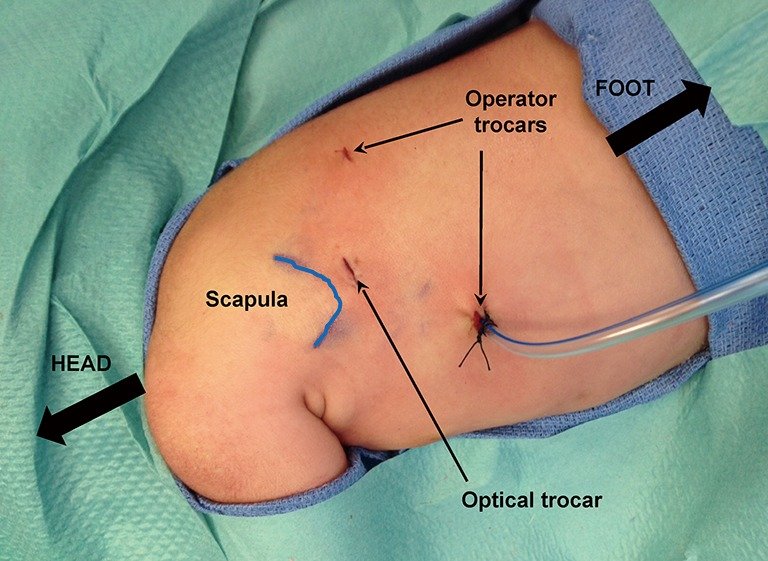
The surgeon makes several small incisions in the chest wall. A thoracoscope is introduced through one incision, while specialised instruments are inserted through the others.
The camera displays the surgical area on a monitor, allowing the surgeon to identify the diaphragmatic defect and the organs that have moved into the chest.
The surgeon carefully moves the displaced abdominal organs back into the abdominal cavity. This step requires particular attention to avoid injury to the stomach, intestines, liver, and nearby structures.
After the organs have been returned to the abdomen, the surgeon closes the defect using appropriate surgical sutures.
For a defect that can be closed without excessive tension, the edges may be stitched together directly. If the defect is too large for safe direct closure, a suitable patch may be required. The repair method depends on the amount of healthy diaphragm present and the size of the opening.
The surgeon checks the repair and the surrounding structures before completing the operation. If safe completion through the thoracoscopic approach is not possible, conversion to open surgery may be necessary.
Following surgery, the child is transferred to an appropriate recovery area or neonatal intensive care unit (NICU). The team monitors breathing, circulation, pain, fluid balance, and feeding readiness.
Some babies require continued ventilatory support or temporary chest drainage. The duration depends on their lung function, the complexity of the repair, and their overall clinical condition.
The surgical approach depends on the type and size of the defect, the child’s stability, and the surgeon’s assessment.
Thoracoscopic repair uses a camera and instruments introduced through small chest incisions. It may be considered for selected medically stable babies with anatomy suitable for minimally invasive surgery.
Open abdominal repair involves an incision in the abdomen. The surgeon returns the displaced organs to the abdominal cavity and repairs the diaphragmatic defect. This approach is commonly used for neonatal CDH and may be preferred when the defect is large or the baby’s condition makes thoracoscopy unsuitable.
In selected cases, the surgeon may use an incision in the chest to access and repair the defect. The approach depends on the anatomy, the surgical circumstances, and the treating team’s judgment.
The diaphragmatic defect may be repaired directly with sutures when the edges can be brought together safely. Larger defects may require a patch to close the opening without excessive tension.
The choice between thoracoscopic and open surgery is individualised. Minimally invasive surgery should not automatically be considered the best option for every child, particularly because recurrence of the hernia has been reported more frequently after thoracoscopic repair in several comparative studies. NICE guidance and published clinical evidence discuss the importance of careful patient selection.
Preoperative investigations help the medical team assess the defect and determine whether the child can safely undergo the planned procedure.
These may include:
The exact investigations depend on the child’s condition. In newborns with CDH, stabilisation of breathing and circulation is a critical part of care before surgical repair.
For appropriately selected children, thoracoscopic repair may offer certain advantages over open surgery.
Potential benefits include:
These benefits must be balanced against the child’s condition and the possibility of complications. Thoracoscopic repair can be technically demanding, and some studies report higher recurrence rates than with open repair. The surgical team should explain these considerations before consent is obtained.
Thoracoscopic CDH repair is an established technique for selected patients, but it requires careful patient selection and specific surgical expertise.
Potential risks include:
The underlying CDH can also cause significant lung underdevelopment and pulmonary hypertension, which may affect recovery independently of the surgical technique.
Parents should discuss the expected benefits, limitations, recurrence risk, and alternatives with the treating team. The safest approach is determined by the child’s condition rather than by incision size alone.
Recovery depends on the severity of the hernia, lung development, pulmonary hypertension, the type of repair, and the baby’s need for respiratory support.
The child is closely monitored in the NICU or another appropriate recovery setting. The team assesses breathing, oxygen levels, circulation, pain, and fluid balance.
Some babies need mechanical ventilation after surgery. The duration varies considerably depending on lung function and the severity of pulmonary hypertension. Surgery does not necessarily mean that breathing support can be stopped immediately.
Feeding is restarted according to the child’s respiratory stability, bowel function, and overall condition. Some babies initially receive nutrition through a vein before feeds are gradually introduced and increased.
The length of hospitalisation varies. Babies with significant lung problems, feeding difficulties, or other complications may need prolonged intensive care.
Before discharge, parents receive instructions about feeding, medicines, wound care, warning signs, and follow-up appointments. The medical team also explains any special respiratory or nutritional needs.
Postoperative care is important for supporting recovery and detecting complications early.
Parents should:
Seek prompt medical advice if the child develops breathing difficulty, persistent vomiting, abdominal distension, fever, poor feeding, unusual lethargy, or worsening pain. Severe breathing difficulty or sudden deterioration requires emergency assessment.
Children who undergo CDH repair may need ongoing follow-up even when the operation is successful. The condition can affect lung development, feeding, growth, and other aspects of health.
Long-term assessment may include:
The follow-up plan should be individualised. Children with larger defects, patch repairs, significant respiratory support needs, or other complications may require more extensive monitoring.
Before the operation, parents should understand the child’s diagnosis, the severity of the condition, and why a particular surgical approach is being considered.
Important points to discuss include:
Parents should also ask the medical team how the baby’s associated lung or heart problems will be managed before and after the operation.
The cost of thoracoscopic CDH repair in children varies depending on the child’s condition, the hospital, the complexity of the defect, intensive care requirements, and the length of hospitalisation.
Factors that may influence the overall cost include:
Because babies with CDH may require substantial intensive care, the total cost can vary considerably. Parents should request an individual estimate from the treating hospital after assessment of the child’s condition and expected care requirements.
Thoracoscopic CDH repair is a minimally invasive operation used to correct congenital diaphragmatic hernia. The surgeon uses a camera and specialised instruments inserted through small chest incisions to return abdominal organs to the abdomen and repair the diaphragmatic defect.
No. The procedure is considered for selected babies whose respiratory and cardiovascular condition and anatomy are suitable. Open repair may be preferred for babies with severe instability, significant pulmonary hypertension, or complex defects.
CDH is usually identified before birth or during the newborn period, and repair is planned after the baby’s condition has been stabilised. The timing depends on respiratory function, circulation, pulmonary hypertension, and the overall clinical assessment.
Thoracoscopic repair offers smaller incisions, but it is not necessarily better for every child. Comparative evidence has raised concerns about a higher risk of recurrence after thoracoscopic repair in some groups. The safest approach depends on the baby’s condition, the defect, and the team’s expertise.
A patch may be needed when the diaphragmatic defect is too large to close directly without excessive tension. Smaller defects may be repaired with sutures alone. The final decision depends on the anatomy identified during surgery.
Recovery varies considerably. Some children need only a shorter period of postoperative support, while babies with underdeveloped lungs or pulmonary hypertension may require prolonged intensive care. The treating team can provide a more individualised estimate as recovery progresses.
Some babies need mechanical ventilation after CDH repair, depending on lung function and the severity of the condition. The need for breathing support and the time required to wean from it vary from child to child.
Yes. Recurrence is a recognised complication after CDH repair. Follow-up is important so that suspected recurrence and other complications can be evaluated promptly.
Not every child develops normal lung function after repair. CDH can cause lung underdevelopment before birth, and some children may continue to experience respiratory problems. Long-term outcomes depend on the severity of the original condition and associated complications.
Yes. Follow-up helps assess growth, breathing, feeding, development, and possible hernia recurrence. The medical team determines which specialist assessments are needed as the child grows.
Dr. Muni Varma offers Thoracoscopic CDH Repair in Children in Lucknow, India. With more than 10 years of experience, he uses a careful and child-focused approach to provide appropriate evaluation, surgical planning, and follow-up care. He helps parents understand the surgical approach, available treatment options, and expected recovery for children requiring congenital diaphragmatic hernia repair.
