Pediatric Appendectomy (Appendix Removal Surgery) is a surgical procedure used to remove the appendix when it becomes inflamed or infected, a condition known as appendicitis. Appendicitis can develop suddenly in children and may become serious if treatment is delayed.
Children may not always describe abdominal pain clearly, and symptoms can sometimes look similar to stomach infection, constipation or other digestive problems. A timely evaluation by a pediatric surgeon can help identify the cause of the symptoms and determine the appropriate treatment.
Dr. Muni Varma provides evaluation and surgical care for children with appendicitis, with the treatment plan based on the child’s symptoms, examination, investigations and overall condition.
The appendix is a small, finger-shaped pouch connected to the beginning of the large intestine. It is located near the junction of the small intestine and large intestine.
The appendix is not essential for normal digestion, but it can become blocked and inflamed. This inflammation is called appendicitis.
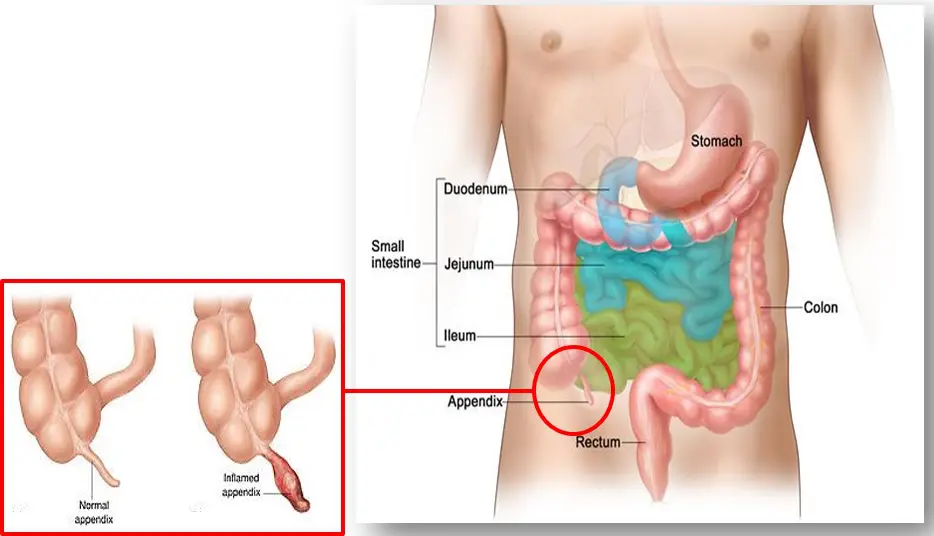
Appendicitis occurs when the appendix becomes inflamed, usually after its opening becomes blocked. As inflammation progresses, the appendix can become swollen and infected.
If treatment is delayed, the appendix may rupture and allow infection to spread inside the abdomen.
Appendicitis can occur at different ages, including during childhood and adolescence.
Appendicitis can develop when the opening of the appendix becomes blocked.
Possible causes include:
Once the appendix is blocked, bacteria can multiply inside it, leading to inflammation and infection.
Symptoms can vary depending on the child’s age and the stage of appendicitis.
Common symptoms include:
Younger children may not be able to describe exactly where the pain is located. They may instead become irritable, refuse food or appear less active than usual.
Persistent or worsening abdominal pain in a child should be evaluated by a medical professional.
Parents should seek prompt medical attention if abdominal pain occurs along with:
These symptoms can have several causes, including appendicitis, and should not be diagnosed at home.
The diagnosis begins with a detailed history and physical examination.
Depending on the child’s symptoms, the doctor may recommend:
Ultrasound is commonly used in children because it does not expose them to radiation.
The diagnosis is made by considering the child’s symptoms, examination findings and investigation results together.
Pediatric appendectomy is the surgical removal of an inflamed appendix.
The procedure is performed when appendicitis requires surgical treatment. Removing the appendix prevents the inflamed organ from progressing to complications such as rupture, peritonitis or an abdominal abscess.
Appendectomy can be performed using either a laparoscopic or open surgical approach.
Laparoscopic appendectomy is performed through small incisions in the abdomen.
A camera allows the surgeon to see inside the abdomen while specialized instruments are used to identify and remove the appendix.
The appendix is separated from the surrounding tissues and removed safely.
When appropriate, laparoscopic surgery may result in smaller incisions and a relatively quicker recovery.
An open appendectomy involves making an incision in the abdomen to access and remove the appendix.
This approach may be considered in certain situations, particularly when the appendix has ruptured or when the surgeon determines that an open operation is more appropriate.
The choice of technique depends on the child’s condition and the findings during evaluation.
An inflamed appendix can sometimes develop a hole or rupture if treatment is delayed.
A ruptured appendix can allow infected material to spread into the abdominal cavity and may cause:
Treatment may involve surgery, antibiotics, drainage of an abscess or a combination of these treatments depending on the individual case.
Children with complicated appendicitis may require a longer period of hospital care.
Appendectomy is a commonly performed pediatric surgical procedure, but every operation has potential risks.
Possible complications include:
The risk of complications can be higher when the appendix has already ruptured.
Recovery depends on whether the appendicitis was uncomplicated or complicated.
Children with uncomplicated appendicitis often recover relatively quickly after surgery. Children with a ruptured appendix may require additional antibiotics and a longer period of observation.
Parents may receive instructions regarding:
The treating surgeon will advise when the child can safely return to normal activities.
The timing varies from child to child.
A child may return to school once they are comfortable, eating and drinking normally, and able to participate in routine activities as advised by the surgeon.
Sports, running and other strenuous activities may need to be restricted for a period after surgery.
Some children with selected cases of uncomplicated appendicitis may be considered for antibiotic treatment without immediate surgery.
However, this approach is not appropriate for every child and appendicitis can recur after non-operative treatment.
The decision depends on factors such as the child’s clinical condition, imaging findings and whether complications are present. Parents should discuss available treatment options with the pediatric surgical team.
Pediatric appendectomy is surgery to remove the appendix in a child, usually because of appendicitis.
Common signs include abdominal pain, loss of appetite, nausea, vomiting and fever. The pain may initially occur around the belly button and later become more noticeable in the lower right abdomen.
Yes. Appendicitis can occur in children of different ages, although symptoms may be less specific in younger children.
Yes. Pediatric appendectomy is performed under appropriate anesthesia so the child does not experience pain during the operation.
Yes. Laparoscopic appendectomy is commonly used for children when it is clinically appropriate.
A ruptured appendix can cause infection inside the abdomen. Treatment may require surgery, antibiotics, drainage or a combination of these approaches.
The length of stay depends on the severity of appendicitis. Children with uncomplicated appendicitis may go home relatively soon, while children with a ruptured appendix may need longer hospital care.
Once the appendix has been completely removed, appendicitis involving that appendix cannot recur.
Recovery varies according to the severity of appendicitis and the surgical approach. The pediatric surgeon will provide individual instructions regarding school, physical activity and follow-up.
No. Many conditions can cause abdominal pain in children. A proper medical examination and appropriate investigations are needed to determine whether appendicitis is present.
Dr. Muni Varma offers advanced Pediatric Appendectomy (Appendix Removal Surgery) for Children in Lucknow, India. With more than 10 years of experience, he uses a careful and child-focused approach to provide accurate evaluation, appropriate surgical planning, and timely treatment for children with appendicitis. He offers personalized surgical care and follow-up support, helping parents understand the treatment process and providing quality pediatric surgical care in Lucknow, India.
