Pediatric Cholecystectomy (Gallbladder Removal Surgery) is an operation performed to remove the gallbladder when it causes repeated symptoms or develops a condition that requires surgical treatment. Gallbladder problems are less common in children than in adults, but gallstones, inflammation and certain other conditions can occur during childhood.
A child with gallbladder disease may experience abdominal pain, nausea, vomiting or discomfort after eating. Some children may have no symptoms until a complication develops.
Dr. Muni Varma evaluates children with suspected gallbladder problems and recommends treatment based on the child’s symptoms, examination, ultrasound findings and overall health.
The gallbladder is a small, pear-shaped organ located beneath the liver. It stores and concentrates bile, a digestive fluid produced by the liver.
When food, particularly fatty food, enters the digestive system, the gallbladder releases bile into the small intestine to help with digestion.
The gallbladder is not essential for normal digestion, which means that a child can generally live a normal life after it is removed.
Gallstones are hardened deposits that form inside the gallbladder.
Although gallstones are more commonly associated with adults, they can also occur in children. Some children with gallstones have no symptoms, while others develop repeated abdominal pain or complications.
Gallstones may contain mainly cholesterol, pigment or a combination of substances.
Gallstones in children can develop for several reasons.
Possible risk factors include:
In some children, no specific cause can be identified.
Some children with gallstones do not have symptoms. When symptoms occur, they may include:
Severe or persistent abdominal pain requires medical evaluation because several conditions can cause similar symptoms.
Not every child with gallstones needs surgery.
Cholecystectomy may be recommended when a child has symptomatic gallstones or complications related to the gallbladder.
Possible reasons for surgery include:
The decision depends on the child’s symptoms, test results and overall condition.
Cholecystectomy is the surgical removal of the gallbladder.
In children, the procedure is commonly performed using a minimally invasive laparoscopic approach when appropriate.
Removing the gallbladder prevents the gallbladder from forming stones again and can relieve symptoms caused by gallbladder disease.
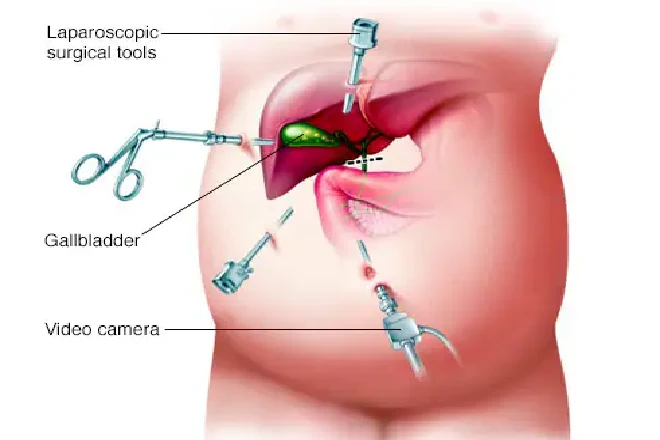
During laparoscopic cholecystectomy, the surgeon makes several small openings in the abdomen.
A small camera is inserted through one opening, allowing the surgeon to view the gallbladder and surrounding structures. Specialized instruments are then used to carefully separate and remove the gallbladder.
The gallbladder is removed through one of the small incisions.
The exact surgical approach depends on the child’s condition and the findings during surgery.
Laparoscopic surgery is commonly used for pediatric gallbladder removal when appropriate.
Compared with traditional open surgery, minimally invasive surgery uses smaller incisions and may allow children to return to normal activities sooner.
However, the appropriate surgical approach depends on the child’s condition, previous abdominal surgery and the complexity of the gallbladder disease.
Evaluation usually begins with a medical history and physical examination.
The doctor may recommend:
Ultrasound is commonly used to identify gallstones and assess the gallbladder.
The final treatment decision is based on the child’s symptoms and investigation results together.
Cholecystitis means inflammation of the gallbladder.
It can occur when a gallstone blocks the normal flow of bile from the gallbladder.
Children with cholecystitis may develop persistent upper abdominal pain, fever, nausea or vomiting.
When gallbladder inflammation is significant or recurrent, surgical treatment may be recommended.
Yes. A gallstone can sometimes move into the bile duct and interfere with the drainage of pancreatic secretions, resulting in acute pancreatitis.
A child with gallstone pancreatitis may have significant abdominal pain and vomiting and requires medical assessment.
If gallstones are responsible for recurrent or complicated disease, gallbladder removal may be considered once the child is appropriately stabilized.
Laparoscopic cholecystectomy is a well-established surgical procedure, but every operation has potential risks.
Possible complications include:
The risk depends on the child’s medical condition and the complexity of the surgery.
Most children recover well after uncomplicated laparoscopic cholecystectomy.
Parents may receive instructions regarding:
Some children may experience temporary changes in digestion after surgery, but most are able to return to a normal diet and routine as recovery progresses.
Yes, The gallbladder stores bile, but the liver continues to produce bile after the gallbladder is removed. Bile flows directly from the liver into the small intestine.
Most children can return to a normal lifestyle after recovering from gallbladder removal surgery.
The treating team may initially recommend lighter meals while the child recovers.
As digestion settles, most children can gradually return to their normal diet.
Parents should follow the dietary instructions provided by the pediatric surgical team, particularly during the early recovery period.
A child with known gallstones or gallbladder disease should be medically evaluated if they develop:
These symptoms may indicate a complication and should not be ignored.
Pediatric cholecystectomy is surgery to remove the gallbladder in a child, usually because of symptomatic gallstones or another gallbladder condition.
Yes. Although gallstones are less common in children than adults, they can occur during childhood.
No. Children with asymptomatic gallstones may not always require immediate surgery. Treatment depends on symptoms, complications and the underlying cause.
Symptoms can include upper abdominal pain, nausea, vomiting and discomfort after meals. Some children may have no symptoms.
Yes. Laparoscopic cholecystectomy is commonly used when it is appropriate for the child’s condition.
Yes. The liver continues to produce bile after the gallbladder is removed, and most children can return to a normal lifestyle.
Recovery varies between children. The time depends on the surgical approach, the severity of gallbladder disease and the child’s overall health.
Gallstones cannot form inside a gallbladder that has been removed. However, stones can occasionally be present or develop in the bile ducts, which is a different condition.
Yes. A gallstone can sometimes block the bile or pancreatic duct and contribute to pancreatitis.
A child with symptomatic gallstones, repeated abdominal pain or gallbladder-related complications should be evaluated by a pediatric surgeon to determine the appropriate treatment.
Dr. Muni Varma offers advanced Pediatric Cholecystectomy (Gallbladder Removal Surgery) for Children in Lucknow, India. With more than 10 years of experience, he uses a careful and child-focused approach to provide accurate evaluation, appropriate surgical planning, and better long-term care. He offers personalized treatment and follow-up support for children with gallstones and gallbladder conditions, helping parents understand the treatment process and providing quality pediatric surgical care in Lucknow, India.
