Pediatric hemangioma surgery is a surgical procedure used to remove or treat selected hemangiomas in children. A hemangioma is a non-cancerous growth of blood vessels that may appear on the skin or in deeper tissues. Infantile hemangiomas commonly develop during the first weeks of life and may initially grow rapidly before gradually shrinking over time.
Hemangiomas can appear as red, raised skin lesions or bluish swellings beneath the skin. Although many do not require surgery, some may cause ulceration, bleeding, functional problems, significant cosmetic concerns, or residual tissue after the growth has regressed.
The decision to perform surgery depends on the type, size, location, growth pattern, and complications associated with the lesion. Non-surgical treatments, including oral propranolol for suitable infantile hemangiomas, may be preferred when appropriate. Surgery is generally reserved for selected cases in which removal offers a meaningful benefit.
Dr. Muni Varma offers pediatric surgical consultation in Lucknow for children requiring evaluation of hemangiomas and discussion of suitable treatment options. The treatment plan is individualized according to the child’s condition, age, and clinical findings.
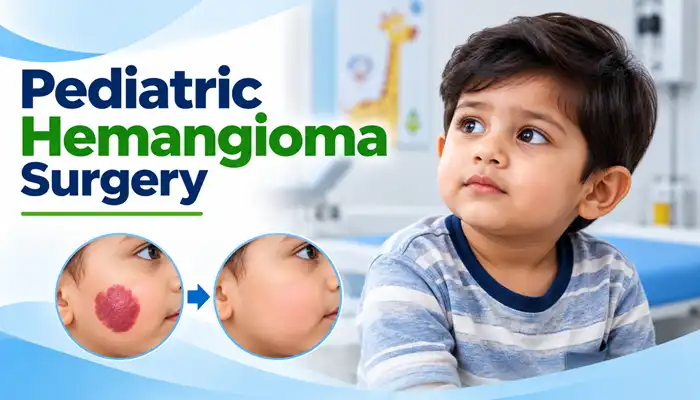
Not every hemangioma requires surgical treatment. Many infantile hemangiomas can be managed through observation, medication, or other non-surgical approaches.
Surgical evaluation may be considered when a hemangioma:
The timing of surgery is determined by the child’s symptoms, the lesion’s behavior, and the risks and benefits of treatment. Lesions near the eyes, nose, lips, or airway may require prompt specialist assessment because of their potential to affect important functions.
The main purpose of hemangioma surgery is to remove selected abnormal vascular tissue or correct problems that remain after the lesion has grown or regressed.
Depending on the child’s condition, surgery may help to:
The expected benefit depends on the hemangioma’s characteristics and its relationship to surrounding structures. Surgery does not guarantee a scar-free result or complete correction of every affected area.
The surgical process varies according to the lesion’s location, size, depth, blood supply, and proximity to important structures.
The general steps may include:
Some lesions may require a staged approach or involvement of additional specialists. The exact procedure is explained to parents before surgery.
Surgical excision involves removing a localized hemangioma when the lesion’s size, location, and characteristics make removal appropriate. The surgeon considers the blood supply and surrounding tissues when planning the procedure.
Some infantile hemangiomas shrink significantly over time but leave behind excess skin, fibrofatty tissue, or an irregular contour. Selected children may benefit from surgery to remove this residual tissue.
When a hemangioma or its treatment has left a noticeable deformity, reconstructive techniques may be considered to improve the contour or function of the affected area. The approach depends on the location and amount of tissue involved.
Selected hemangiomas may require surgical treatment when they cause persistent wound problems, bleeding, or other complications that cannot be adequately managed with other approaches. The decision is made after specialist assessment.
Large or complex lesions may not be suitable for complete removal in a single procedure. In selected cases, treatment may be planned in stages to address the lesion safely while considering function and appearance.
Surgical planning involves assessing both the hemangioma and the child’s overall health. The aim is to select a treatment that offers meaningful benefits while limiting avoidable risks.
The evaluation may include:
Some lesions that resemble hemangiomas may actually be vascular malformations or other types of growths. Correct diagnosis is important because their treatment may differ substantially.
Hemangioma surgery can be appropriate for selected children, but its safety depends on the lesion’s location, size, blood supply, and complexity. The surgeon assesses these factors and discusses potential benefits and risks with the parents.
Possible risks include:
Hemangiomas may contain numerous blood vessels, so bleeding control is an important part of surgical planning. Complex lesions may require additional specialist involvement.
When surgery is appropriate, potential benefits may include:
The results vary according to the lesion and the surgical approach. Parents should discuss the likely scar, expected cosmetic outcome, and possibility of additional treatment before making a decision.
Recovery depends on the size and location of the hemangioma, the amount of tissue removed, and whether reconstruction was required.
After surgery, the child may experience temporary discomfort, swelling, bruising, or tenderness around the surgical site.
General postoperative guidance may include:
Children can return to school and normal activities gradually, according to their healing and the surgeon’s recommendations.
Follow-up appointments help assess wound healing and the result of surgery. They also allow the treating team to identify complications and determine whether additional treatment is needed.
Parents should:
Heavy bleeding, rapidly increasing swelling, breathing difficulty, or other severe symptoms require urgent medical attention.
Recurrence or persistence is possible in some cases, particularly when the lesion is extensive or cannot be completely removed without risking nearby structures. Some children may also have residual skin changes or tissue that require further treatment.
The likelihood of recurrence depends on the type of lesion, its extent, the completeness of removal, and the child’s individual condition. Follow-up helps assess the outcome and determine whether additional management is necessary.
Oral propranolol and surgery serve different roles in the management of infantile hemangiomas.
Oral propranolol therapy is commonly used as a first-line systemic treatment for infantile hemangiomas that require medication. It can help control growth and reduce the lesion’s size.
Surgery may be considered for selected localized lesions, complications, inadequate response to other treatments, or residual tissue after the hemangioma has regressed.
Neither approach is appropriate for every child. Propranolol requires medical supervision and specific safety precautions, while surgery involves anesthesia, wound healing, and potential scarring. The treating team recommends an approach based on the diagnosis and the child’s needs.
The cost of pediatric hemangioma surgery in Lucknow depends on several factors, including:
A localized lesion may require a different level of care from a large or deep hemangioma. Parents should obtain an individualized estimate after the child’s evaluation and confirmation of the treatment plan.
Pediatric hemangioma surgery is a procedure used to remove or correct selected hemangiomas or their residual tissue in children. It is considered when surgery offers a meaningful benefit based on the lesion’s characteristics.
No. Many infantile hemangiomas do not require surgery. Depending on the lesion, observation, medication, or another treatment may be more appropriate.
There is no single suitable age for every child. Timing depends on the lesion’s growth, complications, location, response to other treatments, and the risks and benefits of surgery.
Usually not. Oral propranolol is commonly used for infantile hemangiomas that require systemic treatment. Surgery is reserved for selected cases based on clinical assessment.
Many infantile hemangiomas gradually shrink over time. However, some may leave residual skin changes or excess tissue, and others may require treatment because of their location or complications.
Surgery usually leaves some degree of scarring. The final appearance depends on the lesion’s location, the incision, healing, and the child’s skin characteristics. The surgeon can explain the likely cosmetic result before treatment.
Persistence or recurrence is possible in some cases. The likelihood depends on the lesion’s characteristics and the completeness of removal.
Parents should seek assessment if a lesion grows rapidly, develops an ulcer, bleeds repeatedly, becomes painful, or affects vision, breathing, feeding, or another important function. Rapid swelling or significant bleeding requires prompt medical attention.
Dr. Muni Varma offers Pediatric Hemangioma Surgery for Children in Lucknow, India. With more than 10 years of experience, he uses a careful and child-focused approach to provide appropriate evaluation, surgical planning, and follow-up care. He helps parents understand the surgical approach, available treatment options, and expected recovery for children requiring hemangioma surgery.
