Pediatric Hirschsprung’s Disease Surgery is a definitive surgical procedure used to remove the abnormal segment of the intestine that does not contain normal nerve cells and connect healthy, normally innervated bowel to the anus.
The main goal of surgery is to allow stool to pass normally through the intestine and anus without the obstruction caused by the affected bowel segment.
The most commonly used pull-through approaches include the Soave, Swenson, and Duhamel procedures. In selected children, the operation can be performed through a minimally invasive or transanal approach. Some children with severe obstruction, enterocolitis, significant bowel dilation, or an unstable clinical condition may first require temporary bowel diversion such as a colostomy, followed by definitive pull-through surgery.
The appropriate procedure depends on the length of the affected bowel, the child’s age and condition, bowel anatomy, previous treatment, and the surgeon’s assessment.
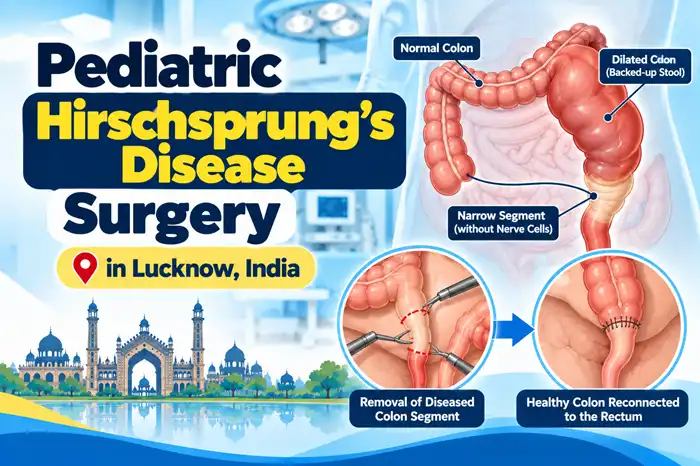
Surgery is generally recommended for children with confirmed Hirschsprung’s disease because the affected bowel segment cannot provide normal coordinated movement of stool.
Definitive surgery may be planned when the child has:
The timing of surgery is individualized according to the child’s symptoms, bowel condition, nutritional status, and overall health.
The main purpose of surgery is to remove or bypass the bowel segment that cannot propel stool normally and connect healthy bowel to the anus.
Surgery aims to:
The exact steps depend on the pull-through technique selected.
In general:
The exact operation differs between Soave, Swenson, Duhamel, transanal, and minimally invasive approaches.
The Soave procedure is a commonly used pull-through technique.
During the procedure, the abnormal bowel is removed while a muscular cuff of the distal rectum is preserved. Healthy ganglion-containing bowel is pulled through this cuff and connected near the anus.
The technique is designed to remove the diseased bowel while preserving the surrounding structures of the distal rectum.
The Swenson procedure involves removing the aganglionic segment and bringing healthy, normally innervated bowel down to the anus.
The affected distal bowel is resected and the healthy bowel is connected to the anal canal.
This is one of the established definitive pull-through procedures for Hirschsprung’s disease.
The Duhamel procedure uses a different reconstruction technique.
Healthy ganglion-containing bowel is brought down behind the remaining distal rectum and joined to the rectum to create a new passage for stool.
This approach leaves part of the distal rectum in place while establishing a functional pathway through healthy bowel.
A transanal pull-through allows the surgeon to perform much of the reconstruction through the anus without a large abdominal incision.
The abnormal bowel is identified, the healthy ganglion-containing bowel is brought down, and the pull-through is completed through the transanal route.
This approach may be suitable for selected children, particularly when the affected segment is appropriate for a transanal procedure.
In selected children, laparoscopy may be used to assist with the pull-through operation.
Small abdominal incisions allow the surgeon to evaluate the bowel, identify the appropriate level of normally innervated intestine, and assist with mobilization before completing the reconstruction.
The suitability of a laparoscopic-assisted approach depends on the child’s anatomy and the length of the affected bowel.
There is no single operation suitable for every child.
The surgical approach may depend on:
The goal is to select the approach that provides safe removal of the affected bowel and an appropriate connection between healthy bowel and the anus.
Some children may require staged treatment rather than immediate definitive pull-through surgery.
A temporary colostomy may be considered when the child has severe bowel obstruction, significant enterocolitis, marked bowel dilation, poor nutritional condition, or another clinical problem that makes immediate definitive surgery less suitable.
During a colostomy, a healthy section of bowel is brought through the abdominal wall to create a temporary opening through which stool can pass.
Once the child has recovered and is medically optimized, definitive pull-through surgery can be performed.
The colostomy may later be closed when the reconstructed bowel is functioning appropriately.
Not every child with Hirschsprung’s disease needs a colostomy.
It may be considered in selected situations such as:
The decision depends on the individual child’s condition.
Hirschsprung’s disease surgery can be performed at different ages depending on when the condition is diagnosed and the child’s clinical condition.
Some children undergo definitive pull-through surgery during infancy, while others may require treatment later in childhood.
Timing depends on:
Pull-through surgery is an established treatment for Hirschsprung’s disease, but it is still a major pediatric surgical procedure with potential complications.
The risk depends on the child’s age, anatomy, severity of disease, bowel condition, nutritional status, and surgical technique.
Careful preparation and postoperative monitoring are important for safe recovery.
Potential benefits include:
Bowel function may continue to improve as the child grows and adapts after surgery.
Possible complications include:
Some children may experience bowel-function problems even after technically successful pull-through surgery and require further evaluation and treatment.
Recovery varies depending on the child’s age, surgical technique, and overall health.
After surgery, the medical team monitors:
Feeding is generally restarted gradually according to the child’s recovery and the surgeon’s instructions.
Parents should:
Parents should seek medical attention if the child develops significant abdominal swelling, repeated vomiting, fever, bloody diarrhea, severe pain, or a sudden reduction in stool passage.
Follow-up is important because bowel function can change as the child grows.
The surgeon may monitor:
Additional investigations may be recommended when bowel symptoms persist or complications are suspected.
Many children develop good bowel function after successful pull-through surgery, but bowel habits can vary.
Some children may initially experience:
Bowel function often changes during recovery and as the child grows.
A bowel-management program may be recommended when symptoms persist.
Constipation can occur after pull-through surgery.
Possible contributing factors include:
Persistent constipation should be evaluated rather than treated only with repeated laxatives without identifying the underlying cause.
Hirschsprung-associated enterocolitis (HAEC) can occur before or after surgery.
Warning signs may include:
Suspected enterocolitis requires prompt medical evaluation because it can become serious.
The return to normal activities depends on the surgical approach and the child’s recovery.
Light activities can generally be resumed gradually according to the surgeon’s recommendations.
Strenuous activities and contact sports may need to be restricted temporarily after surgery.
Children should return to full activity when the surgical team considers it appropriate.
The cost of Pediatric Hirschsprung’s Disease Surgery in India varies depending on the child’s condition and the complexity of treatment.
Factors that may affect the overall cost include:
Parents should discuss the complete treatment plan and estimated cost with the pediatric surgical team.
Before surgery, parents should understand:
Understanding the expected bowel-function changes can help parents prepare for the recovery period.
It is a definitive operation that removes the abnormal bowel segment affected by Hirschsprung’s disease and connects healthy, normally innervated bowel to the anus.
A pull-through procedure removes or bypasses the abnormal bowel and brings healthy ganglion-containing bowel down to the anus to restore a functional passage for stool.
The established techniques include the Soave, Swenson, and Duhamel pull-through procedures. Transanal and laparoscopic-assisted approaches may also be used in selected children.
The Soave pull-through removes the abnormal bowel while preserving a muscular cuff of the distal rectum. Healthy bowel is then brought through the cuff and connected near the anus.
The Swenson procedure involves removing the affected bowel segment and connecting healthy ganglion-containing bowel directly to the anal canal.
The Duhamel procedure brings healthy bowel down behind the remaining distal rectum and creates a new passage by joining the healthy bowel with the rectum.
No. Many children can undergo definitive pull-through surgery without a colostomy. Temporary diversion is reserved for selected children with severe obstruction, enterocolitis, significant bowel dilation, or other clinical concerns.
Surgery removes the bowel segment responsible for the obstruction and can restore intestinal continuity, but some children may continue to experience bowel-function problems and require ongoing management.
Yes. Some children develop constipation after pull-through surgery and may require evaluation to identify the underlying cause and appropriate bowel management.
Yes. Hirschsprung-associated enterocolitis can occur after surgery. Abdominal distension, fever, vomiting, and sudden changes in stool pattern require prompt medical assessment.
Many children achieve good bowel control, but outcomes vary. Some children may experience constipation, urgency, frequent stools, or soiling and may require additional bowel-management support.
Recovery varies depending on the child’s age, health, and type of surgery. Bowel function may continue to improve over weeks or months as the child adapts after the operation.
Dr. Muni Varma offers advanced Pediatric Hirschsprung’s Disease Surgery for Children in Lucknow, India. With more than 10 years of experience, he uses a careful and child-focused approach to provide accurate evaluation, appropriate surgical planning, and better long-term care. He offers personalized treatment and follow-up support for children requiring Hirschsprung’s disease surgery, including appropriate pull-through procedures and staged surgical management when required, helping parents understand the treatment process and providing quality pediatric surgical care in Lucknow, India.
