Pediatric Portal Hypertension Surgery includes surgical procedures used to reduce the complications of abnormally high pressure in the portal venous system when medical or endoscopic treatment is not sufficient or when a definitive surgical procedure is appropriate.
The type of surgery depends on the underlying cause of portal hypertension, the anatomy of the portal venous system, liver function, previous bleeding episodes, and the child’s overall condition.
Surgical treatment may include portal vein reconstruction, Meso-Rex bypass, and selected portosystemic shunt procedures. In children with extrahepatic portal vein obstruction and suitable anatomy, restoration of normal portal blood flow through a Meso-Rex bypass may be considered. Other shunt procedures may be used in selected situations to divert blood away from the high-pressure portal system.
The primary goals are to control complications such as recurrent variceal bleeding, reduce portal venous pressure, improve venous drainage, and preserve or restore appropriate blood flow to the liver whenever possible.
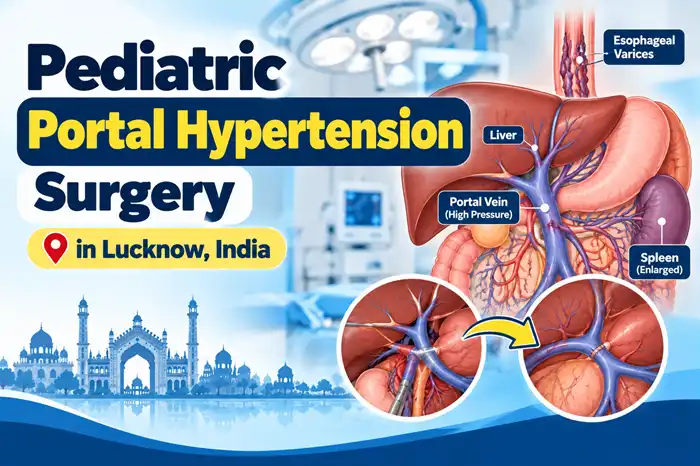
Not every child with portal hypertension requires surgery.
Surgical treatment may be considered when a child has:
The decision depends on the cause of portal hypertension and the child’s individual anatomy and clinical condition.
The purpose of surgery is to address the underlying abnormal portal venous circulation and reduce complications.
Depending on the procedure, surgery may help:
The specific goal depends on the procedure selected.
Shunt surgery creates an alternative pathway for blood to flow when pressure in the portal venous system is excessively high.
In a portosystemic shunt, blood from the high-pressure portal circulation is redirected into the lower-pressure systemic venous circulation. This can reduce portal pressure and help control complications such as recurrent variceal bleeding.
However, shunt surgery is not the same for every child. The appropriate procedure depends on the cause of portal hypertension, the anatomy of the portal and systemic veins, liver function, and the child’s previous treatment.
Meso-Rex bypass is an important surgical option for selected children with extrahepatic portal vein obstruction (EHPVO).
Unlike a conventional portosystemic shunt, the Meso-Rex bypass aims to restore physiological blood flow to the liver rather than diverting portal blood away from the liver.
During the procedure, a vein graft is used to create a new pathway between the mesenteric venous circulation and the intrahepatic left portal vein through the Rex recess.
Potential goals include:
Meso-Rex bypass requires suitable portal venous anatomy and is not appropriate for every child.
A distal splenorenal shunt connects the splenic vein to the left renal vein.
The procedure is designed to decompress the portal venous system while maintaining some portal blood flow toward the liver.
It may be considered in selected children with portal hypertension when the anatomy and clinical circumstances are appropriate.
A proximal splenorenal shunt connects the splenic vein to the renal vein to divert portal venous blood into the systemic circulation.
This can reduce portal pressure and may be considered in selected children with significant complications of portal hypertension.
The suitability of this procedure depends on the child’s venous anatomy and the underlying cause of portal hypertension.
A mesocaval shunt creates a connection between the mesenteric venous circulation and the inferior vena cava.
It can provide an alternative route for blood to bypass the high-pressure portal system.
This is generally considered only in selected children when the anatomy and clinical situation make it appropriate.
A portocaval shunt connects the portal venous system directly to the systemic venous circulation, usually through the vena cava.
By diverting portal blood into the systemic circulation, the procedure can reduce portal venous pressure.
Because it diverts portal blood away from the liver, careful patient selection is important, particularly in children where preservation of physiological portal flow is an important consideration.
There is no single shunt procedure suitable for every child with portal hypertension.
The surgical plan depends on:
In selected children with extrahepatic portal vein obstruction, Meso-Rex bypass may be preferred because it aims to restore physiological portal blood flow to the liver.
Conventional portosystemic shunts may be considered when Meso-Rex bypass is not feasible or when another form of portal decompression is more appropriate.
The exact steps depend on the selected operation.
In general:
Complex vascular reconstruction requires careful planning because maintaining adequate blood flow through the new shunt or bypass is essential.
Before surgery, the team may evaluate:
These assessments help determine whether reconstruction, Meso-Rex bypass, or another shunt procedure is appropriate.
Portal hypertension surgery can be performed in children of different ages when medically indicated.
The timing depends on:
The decision is individualized rather than based on age alone.
Portal hypertension surgery is complex vascular surgery and carries potential risks.
The safety of the procedure depends on the child’s underlying condition, portal venous anatomy, liver function, previous treatments, and the specific surgical technique.
Careful preoperative imaging, experienced pediatric surgical care, and postoperative monitoring are important.
Potential benefits include:
The expected benefits vary according to the child’s underlying disease and surgical procedure.
Potential complications include:
Portosystemic shunts can also alter the normal distribution of blood flow through the liver. Therefore, careful selection and long-term follow-up are important.
Recovery depends on the type and complexity of the procedure.
Children undergoing major vascular reconstruction may require close postoperative monitoring.
During recovery, the medical team may monitor:
Follow-up imaging, particularly Doppler ultrasound, may be used to assess blood flow through the reconstructed pathway.
After surgery, parents should:
Any episode of significant gastrointestinal bleeding requires urgent medical attention.
Long-term follow-up is important after portal hypertension surgery.
The child may require monitoring of:
Doppler ultrasound or other vascular imaging may be performed to ensure that the shunt or bypass remains open and functioning properly.
Yes. A shunt or vascular bypass can develop narrowing or thrombosis and may stop functioning properly.
Regular follow-up is important because early detection of reduced blood flow may allow the medical team to consider appropriate treatment.
Children may require periodic Doppler ultrasound or other imaging according to the surgical team’s recommendations.
The effect of surgery on portal blood flow depends on the procedure.
Meso-Rex bypass aims to restore physiological portal blood flow to the liver, while conventional portosystemic shunts redirect some portal blood into the systemic circulation.
This difference is an important consideration when selecting surgery for a child.
The return to normal activities depends on the type of surgery and the child’s recovery.
Light activities can generally be resumed gradually according to medical advice.
Strenuous activities, contact sports, and activities that could cause abdominal injury may need to be restricted for a period after surgery.
The surgeon will provide individualized guidance based on the child’s recovery.
The cost of Pediatric Portal Hypertension Surgery in India varies depending on the underlying condition and complexity of the operation.
Factors that may affect the cost include:
Parents should discuss the treatment plan and estimated cost with the pediatric surgical team.
Before surgery, parents should understand:
Parents should also understand that the choice between Meso-Rex bypass and a conventional portosystemic shunt depends on the child’s individual vascular anatomy and clinical condition.
Pediatric Portal Hypertension Surgery includes procedures used to reduce complications of portal hypertension, improve portal blood flow, or create an alternative pathway for blood flow when appropriate.
A shunt procedure creates an alternative pathway for blood to flow from the high-pressure portal circulation into another venous pathway, helping reduce portal venous pressure.
Meso-Rex bypass is a vascular reconstruction that aims to restore physiological blood flow from the mesenteric circulation to the intrahepatic portal vein. It is particularly considered in selected children with extrahepatic portal vein obstruction.
No. Meso-Rex bypass is different from a conventional portosystemic shunt. It aims to restore portal blood flow to the liver rather than diverting portal blood away from the liver.
Depending on the child’s anatomy and clinical condition, procedures may include distal splenorenal shunt, proximal splenorenal shunt, mesocaval shunt, or portocaval shunt.
No. Treatment depends on the cause, severity, symptoms, bleeding history, liver function, portal venous anatomy, and response to other treatments.
Surgical decompression can reduce portal pressure and may help prevent recurrent variceal bleeding in appropriately selected children. However, treatment must be individualized.
Yes. Thrombosis or narrowing can affect a shunt or bypass. Regular follow-up imaging helps monitor blood flow.
Recovery varies according to the procedure, the child’s health, and the complexity of the vascular reconstruction. Major shunt or bypass procedures generally require close postoperative monitoring.
Many children require long-term follow-up after portal hypertension surgery to monitor portal blood flow, liver health, blood counts, varices, and shunt or bypass function.
Dr. Muni Varma offers advanced Pediatric Portal Hypertension Surgery for Children in Lucknow, India. With more than 10 years of experience, he uses a careful and child-focused approach to provide accurate evaluation, appropriate surgical planning, and better long-term care. He offers personalized treatment and follow-up support for children requiring surgical treatment for portal hypertension, including selected shunt and portal venous reconstruction procedures, helping parents understand the treatment process and providing quality pediatric surgical care in Lucknow, India.
