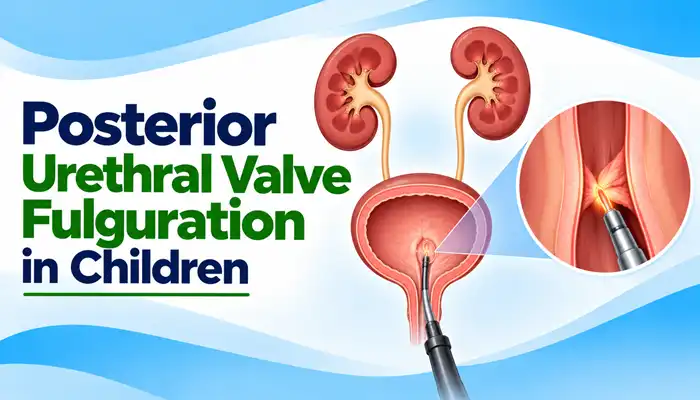
Posterior urethral valve (PUV) fulguration is an endoscopic surgical procedure used to treat posterior urethral valves in boys. During the procedure, a surgeon uses a specialised instrument passed through the urethra to divide or ablate the abnormal valve tissue that obstructs the flow of urine from the bladder.
Posterior urethral valves are congenital folds of tissue in the urethra, meaning they are present from birth. They can partially or severely obstruct urine flow, placing pressure on the bladder and potentially affecting the kidneys. Early diagnosis and appropriate treatment are important to reduce the risk of ongoing urinary tract damage.
Posterior urethral valve fulguration in children is commonly performed using an endoscopic approach, avoiding the need for a large external incision. The exact technique depends on the child’s age, urethral anatomy, severity of obstruction, and overall clinical condition.
A pediatric surgeon or pediatric urology specialist may recommend PUV fulguration after posterior urethral valves have been diagnosed and the obstruction requires treatment.
The procedure may be considered in children with:
Not every child with suspected PUV requires immediate fulguration without further assessment. The treating team evaluates the diagnosis, severity of obstruction, kidney function, bladder condition, and the child’s stability before deciding on the timing and approach.
The main purpose of PUV fulguration is to relieve the obstruction caused by abnormal valve tissue in the urethra.
The procedure aims to:
Although relieving the obstruction is essential, it cannot guarantee normal kidney or bladder function. Some children continue to need long-term monitoring and treatment because the condition may have affected the urinary system before diagnosis or treatment.
PUV fulguration is performed in an operating theatre by a trained specialist. The procedure generally involves the following steps.
The doctor reviews the child’s medical history, urinary symptoms, imaging results, urine tests, and kidney function. Additional investigations may be required to assess the severity of the obstruction and identify associated urinary tract abnormalities.
The procedure is usually performed under general anaesthesia so the child remains asleep and comfortable during surgery. The anaesthesia team monitors the child’s vital signs throughout the operation.
A specialised endoscopic instrument is gently introduced through the urethral opening into the urethra. This allows the surgeon to inspect the urinary passage and identify the posterior urethral valves.
The surgeon examines the location and appearance of the abnormal tissue and assesses how it obstructs urine flow. The procedure is performed carefully to minimise injury to the surrounding urethral structures.
Using an appropriate endoscopic instrument, the surgeon divides or ablates the obstructing valve tissue. The aim is to create a more open passage for urine to flow from the bladder.
The exact technique and energy source depend on the equipment available and the child’s anatomy. The surgeon chooses the safest suitable method for the individual case.
The surgeon assesses the result of the procedure. A urinary catheter is commonly left temporarily to allow urine drainage and support postoperative monitoring, although the duration depends on the child’s condition and the surgeon’s protocol.
The child is observed after surgery. The medical team monitors urine output, fluid balance, kidney function when indicated, and any signs of complications.
The term PUV ablation is often used to describe endoscopic treatment that divides or removes the obstructing valve tissue. The technique depends on the child’s age, urethral size, and clinical circumstances.
A specialised instrument is passed through the urethra to divide the valve tissue and relieve the obstruction. This is an established treatment approach for posterior urethral valves.
An electrosurgical instrument may be used to divide or ablate the valve tissue. Careful technique is essential to avoid damage to the surrounding urethra.
In selected circumstances, laser energy may be used to treat the obstructing tissue. The choice depends on the surgeon’s expertise, available equipment, and the child’s anatomy.
The treating specialist determines the most appropriate technique. Not every method is suitable for every child, and the main objective is safe relief of the obstruction.
Preoperative investigations help confirm the diagnosis, assess the urinary tract, and guide treatment.
These may include:
If a child has significant infection, electrolyte abnormalities, kidney impairment, or other complications, stabilisation may be needed before definitive valve treatment.
Endoscopic PUV treatment is an established procedure, but its safety depends on the child’s condition, the severity of obstruction, and the surgical technique used.
Potential complications include:
The surgeon takes precautions to minimise these risks and will explain the benefits, limitations, and alternatives before treatment. In children with severe obstruction or significant medical complications, additional monitoring and supportive treatment may be necessary.
Recovery depends on the child’s age, the severity of the obstruction, kidney function, and whether any complications are present.
The child is monitored as they recover from anaesthesia. The team checks urine drainage, fluid balance, vital signs, and comfort.
A catheter may be left in place temporarily to drain urine and allow the bladder to recover. The medical team determines when it can be removed based on the child’s condition and urine drainage.
The length of hospitalisation varies. Some children may be discharged after a short stay, while newborns or children with significant kidney problems, infection, or fluid-balance concerns may require longer monitoring.
Parents receive instructions about medicines, hydration, catheter care if applicable, activity, and follow-up. Any blood in the urine should be monitored according to the discharge instructions.
Aftercare is important to monitor recovery and identify complications early.
Parents should seek medical advice if the child develops fever, worsening pain, persistent vomiting, significantly reduced urine output, or difficulty passing urine. Inability to pass urine or severe symptoms require urgent medical assessment.
Successful valve ablation relieves the physical obstruction, but some children may continue to have bladder dysfunction or reduced kidney function. This is because the obstruction may have affected the urinary system before treatment, and some changes may persist after the valve tissue has been divided.
Long-term follow-up may include:
Some children may need further treatment for bladder dysfunction, urinary reflux, or other associated conditions. Follow-up should be individualised according to the child’s kidney function, bladder performance, and clinical progress.
Parents should understand the purpose of the procedure and the importance of follow-up after surgery.
Key points to discuss with the treating team include:
Parents should share details of the child’s medicines, allergies, previous urinary infections, and any known kidney or bladder abnormalities.
The cost of posterior urethral valve fulguration in children varies according to the hospital, the child’s age and medical condition, anaesthesia requirements, investigations, length of hospital stay, and any additional treatment needed.
Factors that may influence the overall cost include:
Parents should request a personalised estimate after clinical evaluation so the expected treatment expenses can be explained clearly.
Posterior urethral valve fulguration is an endoscopic procedure used to divide or ablate abnormal tissue in the urethra that obstructs urine flow in boys. It aims to relieve the obstruction and support better urinary drainage.
Treatment may be required in newborns, infants, or older boys, depending on when the condition is diagnosed and how severely it affects urine flow and kidney function. The timing is determined by the child’s clinical condition.
It is an endoscopic procedure performed through the urethra without a large external incision. However, it is an important operation that requires appropriate anaesthesia, specialist expertise, and postoperative monitoring.
The procedure aims to relieve the obstruction, but it cannot guarantee that all urinary problems will resolve. Some children continue to need monitoring or treatment for bladder dysfunction, kidney impairment, or associated urinary tract abnormalities.
A temporary catheter is commonly used after valve ablation to support urine drainage and monitoring. The timing of catheter removal depends on the child’s condition and the treating team’s assessment.
Relieving the obstruction can help protect the urinary system from continued pressure. Kidney function may improve in some children, but the outcome depends on the severity and duration of obstruction and the degree of kidney damage already present.
Yes. Long-term follow-up is important because bladder dysfunction, urinary infections, or kidney problems may persist even after the obstruction has been relieved.
Possible complications include bleeding, infection, urethral injury or scarring, and persistent urinary obstruction. The underlying condition may also be associated with ongoing bladder or kidney problems.
In some cases, prenatal ultrasound may reveal findings such as an enlarged bladder or dilated urinary tract that raise suspicion of posterior urethral valves. Further evaluation after birth may be needed to confirm the diagnosis.
Parents should contact the treating team if the child develops fever, worsening pain, reduced urine output, persistent bleeding, or difficulty passing urine. Inability to urinate or severe symptoms require urgent assessment.
Dr. Muni Varma offers Posterior Urethral Valve Fulguration in Children in Lucknow, India. With more than 10 years of experience, he uses a careful and child-focused approach to provide appropriate evaluation, surgical planning, and follow-up care. He helps parents understand the endoscopic procedure, available treatment options, and expected recovery for children requiring posterior urethral valve treatment.
